LED lighting technology has evolved rapidly over the past decade, offering designers and installers a wide variety of flexible lighting solutions. Two of the most popular products used in modern architectural and decorative lighting are LED strip lights and LED neon flex.
At first glance, these two lighting products may appear similar. Both are flexible, linear lighting systems that can be installed in straight lines or curves. However, their structure, lighting effect, durability, and typical applications are quite different.
Understanding these differences is essential when choosing the right lighting solution for a project.
In this guide, we’ll explore the key differences between LED strip lights and LED neon flex, including design structure, lighting performance, installation methods, durability, and typical applications, helping you determine which option is best for your lighting project.
Table of Contents
Structural Differences: Open LED Chips vs Diffused Silicone Body
The most fundamental difference between LED strip lights and LED neon flex lies in their physical structure.
LED Strip Lights
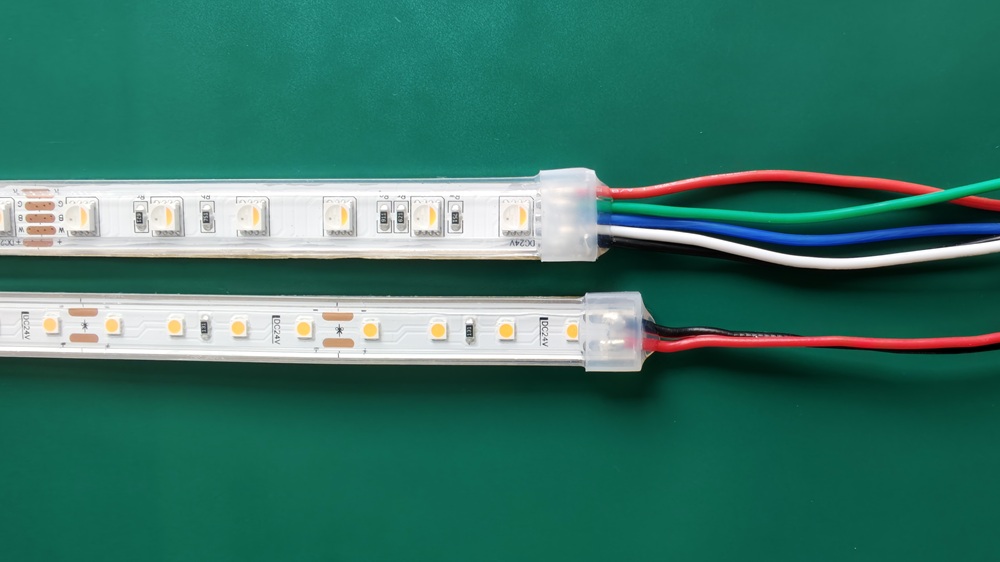
LED strip lights consist of a flexible printed circuit board (PCB) with surface-mounted LEDs (SMD or COB) attached directly to the board. The LEDs are visible and emit light directly outward.
Because the LEDs are exposed, LED strips are usually installed:
- inside aluminum profiles
- behind diffusers
- under cabinets
- inside lighting fixtures
Without a diffuser or cover, individual LED dots may be visible.
LED Neon Flex
LED neon flex is designed to mimic the look of traditional glass neon lighting. Instead of exposing LED chips directly, the LEDs are enclosed within a silicone or PVC diffuser housing.
This diffuser spreads the light evenly, creating a continuous, dot-free lighting line.
The result is a smooth neon-like glow that works particularly well for:
- signage
- architectural outlines
- decorative lighting
- creative installations
Lighting Effect: Direct LED Dots vs Uniform Neon Glow
Another major difference between the two products is the visual lighting effect.
LED Strip Lighting Appearance
Standard LED strip lights produce a direct and focused light output. When installed without a diffuser, the individual LED points may be visible.
However, when placed inside aluminum profiles with diffusers, the light becomes softer and more uniform.
LED strips are excellent for functional lighting, where brightness and efficiency are more important than decorative appearance.
Typical examples include:
- under-cabinet lighting
- shelf lighting
- cove lighting
- task lighting
LED Neon Flex Appearance
LED neon flex produces a continuous line of light without visible LED dots.
The silicone diffuser spreads the light evenly, creating the familiar neon-style glow used in modern lighting designs.
This effect makes neon flex particularly suitable for:
- illuminated signage
- architectural outlines
- decorative lighting designs
- outdoor building accents
For projects where visual impact and smooth lighting lines are important, neon flex often provides a better aesthetic result.
Flexibility and Bending Direction
Both LED strip lights and LED neon flex are flexible, but their bending characteristics differ.
LED Strip Flexibility
LED strip lights can bend easily along the length of the PCB. However, they cannot bend significantly sideways because the PCB structure limits lateral flexibility.
This makes LED strips best suited for:
- straight lines
- gentle curves
- installations inside aluminum channels
LED Neon Flex Bending Types
LED neon flex is specifically engineered to bend in certain directions.
Common types include:
Top-bending neon flex
Bends vertically, ideal for curves and shapes.
Side-bending neon flex
Bends horizontally, ideal for letters and signage.
Because of this controlled bending capability, neon flex is widely used in creative lighting designs and signage installations.
Installation Methods
The installation approach also differs between the two lighting systems.
LED Strip Installation
LED strips typically come with adhesive backing, allowing them to be mounted directly onto surfaces.
For professional installations, LED strips are often installed inside aluminum profiles, which provide:
- improved heat dissipation
- mechanical protection
- better light diffusion
This makes LED strips very convenient for indoor lighting projects.
LED Neon Flex Installation
LED neon flex is usually installed using:
- mounting clips
- aluminum mounting channels
- customized brackets
Because neon flex has a thicker silicone housing, it requires more structured mounting than LED strips.
However, this design also makes it more durable and suitable for outdoor environments.
Durability and Environmental Protection
Durability is another key factor when choosing between LED strip lights and LED neon flex.
LED Strip Durability
Standard LED strips are primarily designed for indoor use.
While waterproof versions exist (such as IP65 or IP67 strips), the exposed PCB structure can still be more sensitive to:
- moisture
- dust
- mechanical damage
For outdoor projects, additional protection is often required.
LED Neon Flex Durability
LED neon flex is designed with a sealed silicone body, which offers much stronger protection against environmental conditions.
High-quality neon flex products can reach protection ratings such as:
- IP65 (dust and splash resistant)
- IP67 (temporary water immersion)
- IP68 (full waterproof for underwater use)
Because of this sealed structure, neon flex performs well in outdoor and harsh environments.
Heat Dissipation and Performance
Heat management affects both brightness stability and product lifespan.
LED Strip Heat Dissipation
LED strips rely on the PCB and installation surface for heat dissipation.
When installed inside aluminum profiles, heat can dissipate more efficiently, which helps extend the lifespan of the LEDs.
Proper thermal management is especially important for high-power LED strips.
LED Neon Flex Thermal Performance
LED neon flex has a thicker silicone housing, which can slightly reduce heat dissipation efficiency compared to open LED strips.
However, modern neon flex designs compensate for this through:
- optimized PCB structures
- efficient LED chips
- carefully designed silicone materials
These improvements allow neon flex to maintain stable performance in most lighting applications.
Typical Applications
Understanding the typical applications of each product can help determine which solution is more suitable.
Common LED Strip Applications
LED strips are widely used in functional lighting environments, such as:
- kitchen cabinet lighting
- shelf lighting
- office lighting
- hotel interior lighting
- cove lighting in ceilings
In these cases, LED strips provide efficient illumination with flexible installation options.
Common LED Neon Flex Applications
LED neon flex is often used where visual design and durability are more important.
Typical uses include:
- illuminated signage and letters
- architectural outlines
- landscape lighting
- building facade lighting
- decorative commercial installations
Because of its smooth glow and weather resistance, neon flex is ideal for creative lighting designs.
Cost Considerations
Price differences also influence the choice between LED strip lights and LED neon flex.
LED Strip Cost
LED strips are generally more affordable, especially for indoor lighting projects.
They require fewer materials and simpler manufacturing processes, making them a cost-effective solution for large indoor installations.
LED Neon Flex Cost
LED neon flex usually costs more because it includes:
- silicone extrusion housing
- integrated diffusion structure
- waterproof sealing
- specialized bending design
However, for signage and architectural lighting, the improved aesthetics and durability often justify the higher cost.
Conclusion
Both LED strip lights and LED neon flex offer flexible and efficient lighting solutions, but they are designed for different purposes.
LED strip lights are ideal for functional indoor lighting, providing high brightness and easy installation for applications such as cabinets, shelves, and ceiling coves.
LED neon flex, on the other hand, is designed for decorative and architectural lighting, offering smooth dot-free illumination and stronger environmental protection.
By understanding the differences in structure, lighting effect, durability, and applications, designers and installers can choose the right product to achieve the best lighting results.
Other articles:
The Ultimate Guide to LED Neon Flex Strip
ESD Protection in LED Neon Strips: Why Anti-Static Manufacturing Matters
Understanding LED Strip Types: Chips, Colors, Voltages & Designs
The Ultimate Guide to LED Strip Lights
As a bespoke lighting solution provider, Yiholight specializes in high-quality LED strips and neon flex lights. Our products are engineered for durability, brightness, and ease of installation—trusted by B2B customers across the globe.
Contact us today to explore the best LED lighting for your business!
© [Yiholight] and [www.yiholight.com]. Unauthorized use or duplication of this material is strictly prohibited without express written permission from the site’s author or owner. Excerpts and links may be used, provided full, clear credit is given to [Yiholight] and [www.yiholight.com], with appropriate, specific direction to the original content.