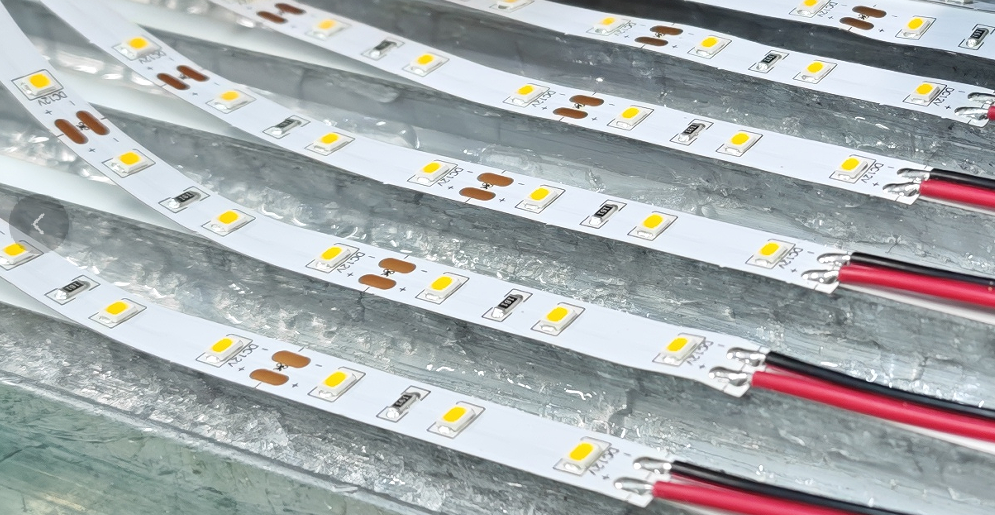
As LED strip lighting continues to dominate residential, commercial, and architectural projects, one question comes up again and again:
“What types of LED strip lights are there, and which one should I choose?”
The answer isn’t simple — because LED strip lights can be classified in several different ways, each serving a specific lighting purpose. Understanding these categories is essential for designers, contractors, and buyers who want the right balance of brightness, efficiency, control, and visual effect.
In this guide, we’ll break down LED strip types by LED chip, color & control, voltage, structure & form, and functional design, giving you a clear and practical framework to understand the entire LED strip landscape.
Table of Contents
Types of LED Strip Lights by LED Chip
The LED chip is the heart of the strip. It directly affects brightness, efficiency, heat dissipation, and application suitability.
3528 LED Strip
3528 LEDs are compact and low-power, typically used for decorative or accent lighting rather than primary illumination. They produce softer brightness and are commonly found in applications like shelf lighting or background accents.
Key features:
- Low power consumption
- Moderate brightness
- Cost-effective
- Ideal for decorative use
2835 LED Strip
2835 LEDs are one of the most widely used chips today. Compared to 3528, they deliver higher brightness and better heat dissipation, making them suitable for both decorative and functional lighting.
Key features:
- High luminous efficiency
- Good thermal performance
- Widely used for residential and commercial lighting
5050 LED Strip
5050 LEDs are larger chips capable of housing three diodes in one package, which makes them ideal for RGB and RGBW applications.
Key features:
- High brightness
- Excellent for color-changing lighting
- Common in entertainment, retail, and architectural projects
3030 LED Strip
3030 LED chips are designed for high-power and high-efficiency applications. They are often used in professional lighting projects where brightness and stability are critical.
Key features:
- High lumen output
- Suitable for long-run and high-power designs
- Preferred in commercial and architectural lighting
COB (Chip on Board) LED Strip
COB LED strips integrate many LED chips directly onto the PCB, creating a continuous, dot-free line of light. This makes them ideal for visible installations where uniformity matters.
Key features:
- Smooth, continuous lighting
- No visible LED dots
- Excellent for linear and premium designs
Mini LED Strip (0606, 1010, etc.)
Mini LED strips use ultra-small LED chips for compact designs, narrow spaces, or refined visual effects.
Key features:
- Extremely compact
- High design flexibility
- Used in slim channels or precision lighting
Types of LED Strip Lights by Color & Control
Color and control define how the light behaves and how users interact with it.
Single-Color LED Strip
These strips emit one fixed color, such as warm white, neutral white, cool white, red, blue, or green.
Typical uses:
- Task lighting
- Accent lighting
- General illumination
CCT Tunable White LED Strip
CCT (Correlated Color Temperature) LED strips allow users to adjust the color temperature — typically from warm white (2700K) to cool white (6500K).
Benefits:
- Adjustable ambiance
- Suitable for residential and commercial environments
- Mimics natural daylight changes
RGB LED Strip
RGB strips combine red, green, and blue LEDs to produce a wide range of colors through mixing.
Common applications:
- Decorative lighting
- Retail displays
- Entertainment environments
RGBW / RGB+TW LED Strip
RGBW strips add a dedicated white LED, while RGB+TW combines RGB with tunable white channels.
Advantages:
- Better white light quality
- Richer color effects
- Greater lighting flexibility
Digital / Addressable LED Strip
Each LED or LED group can be individually controlled, allowing for dynamic effects like chasing, gradients, and animations.
Used for:
- Architectural facades
- Events and stage lighting
- Creative installations
Types of LED Strip Lights by Voltage
Voltage selection impacts safety, run length, and power design.
5V LED Strip
- Typically used for USB-powered or digital LED strips
- Suitable for short runs
- Common in decorative and DIY projects
12V LED Strip
- Widely used in residential applications
- Shorter maximum run length
- Easy to source power supplies
24V LED Strip
- Reduced voltage drop
- Longer continuous runs
- Preferred for commercial and architectural lighting
Constant Current LED Strip
Unlike constant-voltage strips, these maintain stable brightness across longer distances.
Benefits:
- Uniform brightness
- Less voltage drop
- Ideal for long linear installations
Types of LED Strip Lights by Structure & Form
Structure determines how a strip fits into physical spaces.
Standard Flexible LED Strip
The most common form, suitable for straight or gently curved surfaces.
S-Shape LED Strip
Designed with zig-zag PCB cuts, allowing the strip to bend laterally.
Ideal for:
- Curved surfaces
- Irregular shapes
- Signage and custom displays
Side-Emitting LED Strip
LEDs emit light from the side rather than the top.
Applications:
- Edge lighting
- Signage
- Linear architectural accents
LED Sheet
LEDs arranged in a matrix form that can be cut into custom shapes.
Used in:
- Backlighting panels
- Light boxes
- Large uniform surfaces
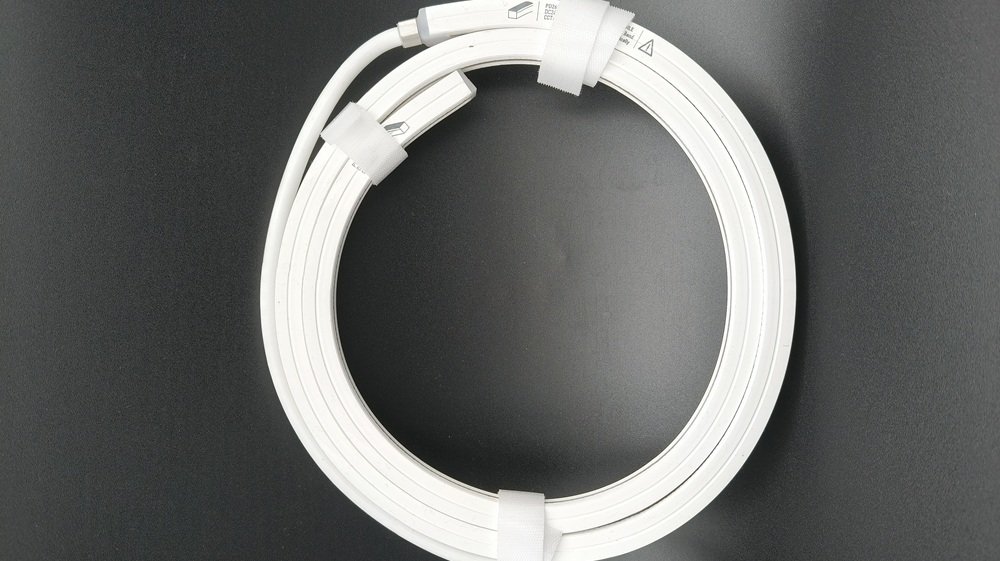
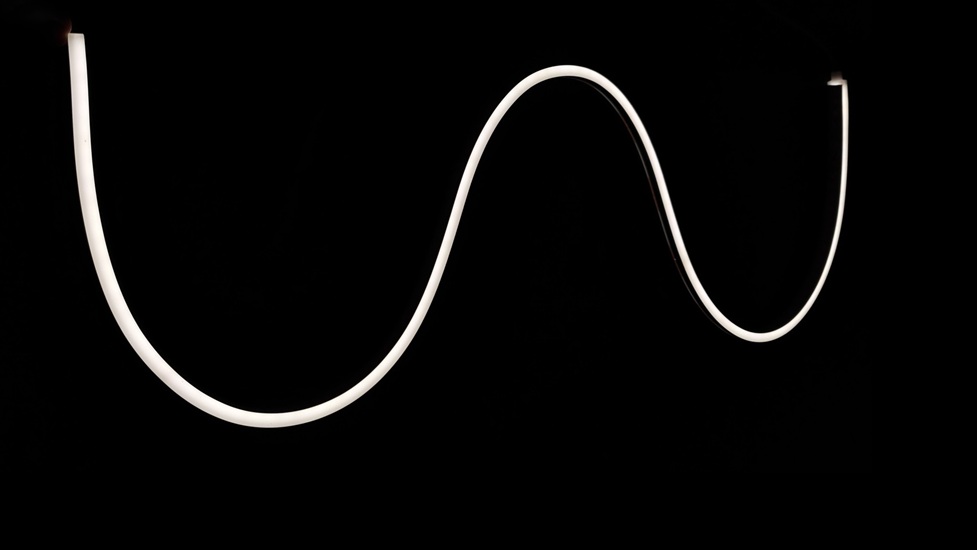
Neon Flex LED Strip
Encased in silicone to create a continuous neon-like appearance.
Types include:
- Top-bend neon
- Side-bend neon
- 3D bend neon
- 360-degree round neon
Types of LED Strip Lights by Functional Design
Beyond structure, LED strips are often designed for specific environments.
High-Efficacy LED Strip
Designed to deliver maximum lumens per watt.
Best for:
- Energy-saving projects
- Commercial installations
Ultra-Long Run LED Strip
Engineered for extended lengths without brightness loss.
Applications:
- Corridors
- Large commercial spaces
- Architectural outlines
Sauna & High-Temperature LED Strip
Built with heat-resistant materials for extreme environments.
Used in:
- Sauna rooms
- Steam rooms
- Wellness facilities
Wall Washer LED Strip
Designed to evenly illuminate vertical surfaces.
Common in:
- Architectural facades
- Feature walls
- Retail interiors
How to Choose the Right Type of LED Strip
Instead of asking “which is best,” ask:
- Is this decorative or functional lighting?
- Do I need color control or tunable white?
- How long is the installation?
- Will the strip be visible?
- Is the environment indoor, outdoor, or high-temperature?
Matching chip + color + voltage + structure is the key to success.
Conclusion
LED strip lights are not a single product — they are a complete lighting system category. By understanding the different types of LED strips available, you can design smarter lighting solutions that balance performance, aesthetics, efficiency, and cost.
Whether you’re planning a residential upgrade or a large-scale commercial project, choosing the right LED strip type makes all the difference.
Other articles:
How to light your kitchen-kitchen design lighting guide
From flat to fabulous: transform walls with LED lighting
This shelf lighting is magic: transform your space with LED strip lights
As a bespoke lighting solution provider, Yiholight specializes in high-quality LED strips and neon flex strip. Our products are engineered for durability, brightness, and ease of installation—trusted by B2B customers across the globe.
Contact us today to explore the best LED lighting for your business!
© [Yiholight] and [www.yiholight.com]. Unauthorized use or duplication of this material is strictly prohibited without express written permission from the site’s author or owner. Excerpts and links may be used, provided full, clear credit is given to [Yiholight] and [www.yiholight.com], with appropriate, specific direction to the original content.