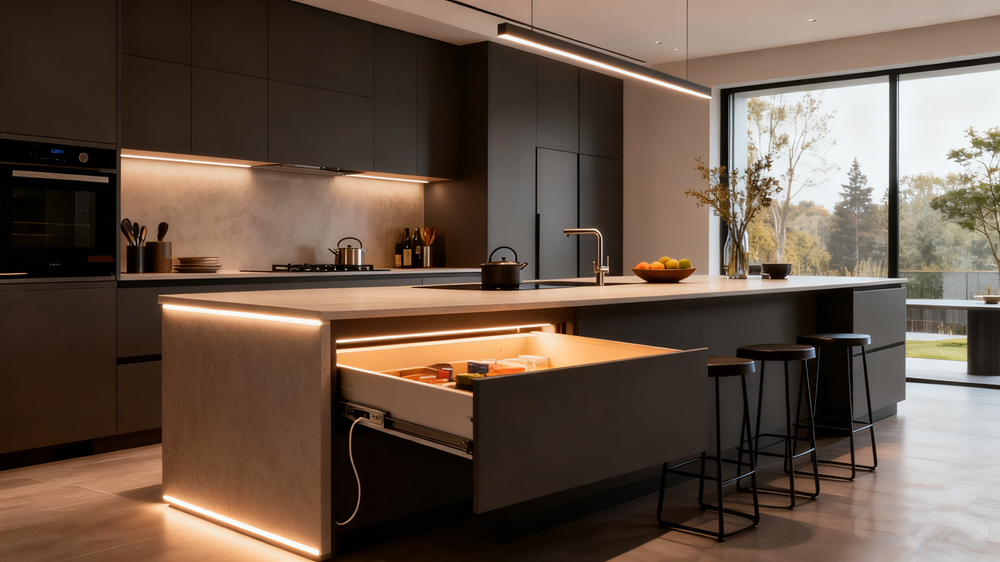
Modern kitchen lighting is increasingly moving toward minimal visible hardware. Designers want lighting systems that provide illumination without exposed wires, bulky profiles, or visible connectors.
Invisible wire LED lighting addresses this demand by integrating low-voltage power delivery into surfaces such as shelves, cabinets, and display panels. Instead of relying on visible cable routing, conductive paths are embedded into structural materials, allowing LED modules to appear directly connected to the furniture itself.
This approach is becoming more common in premium kitchen cabinetry, floating shelves, and custom architectural furniture where visual continuity is a priority.
Table of Contents
What Is Invisible Wire LED Lighting?
Invisible wire LED lighting refers to low-voltage LED systems where electrical pathways are concealed inside structural materials or transparent conductive layers.
Unlike standard LED strip installations that expose:
- wiring
- connectors
- terminal blocks
invisible wire systems integrate power transmission into:
- glass panels
- acrylic surfaces
- laminated furniture boards
- hidden conductive channels
This reduces visible installation components while maintaining standard DC power delivery.
How the Technology Works
The system typically relies on conductive layers embedded into the installation surface.
Common conductive methods include:
Transparent Conductive Film (TCF)
Used in glass or acrylic applications where visibility must be minimized.
Common materials:
- ITO (Indium Tin Oxide)
- silver nano-film
Embedded Copper Microchannels
Ultra-thin copper paths laminated into cabinetry or shelving.
Benefits:
- higher conductivity
- lower resistance
- better long-run stability
Conductive Contact Points
LED modules connect through hidden terminals embedded inside furniture structures.
This creates the appearance of wireless lighting, although the system still uses conventional low-voltage power.
Practical Applications in Kitchen Design
Floating Shelves
Allows shelf lighting without visible side-entry cables.
Best for:
- display kitchens
- premium retail shelving
- glass shelf systems
Under-Cabinet Lighting
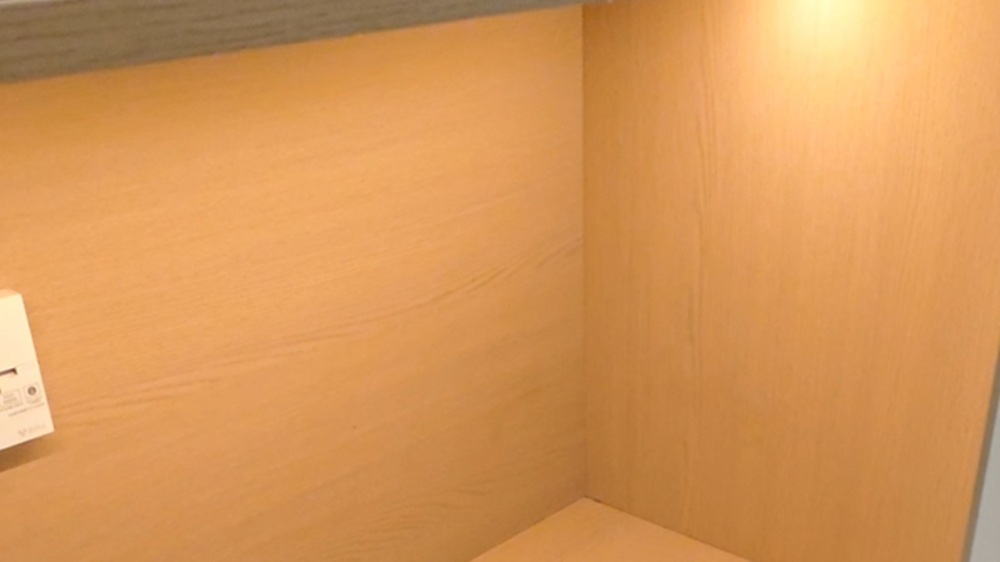
Hidden conductive channels improve visual cleanliness while maintaining task lighting functionality.
Drawer Illumination
Embedded conductive systems can activate automatically when drawers open.
Glass Display Cabinets
Transparent conductive films allow LED integration without visible copper traces.
Advantages Compared to Traditional LED Installation
| Factor | Traditional LED Wiring | Invisible Wire System |
|---|---|---|
| Visible cables | Yes | No |
| Connector exposure | Visible | Hidden |
| Installation aesthetics | Standard | Cleaner |
| Furniture integration | Limited | Higher |
| Maintenance access | Easier | More complex |
Technical Limitations (Important)
Invisible wire LED systems are not suitable for every project.
Voltage Drop
Long conductive paths can increase resistance.
This becomes important in:
- long shelves
- multi-module installations
Repair Complexity
Because wiring is embedded, maintenance may require partial disassembly.
Material Compatibility
Not all wood, acrylic, or laminated surfaces support conductive integration equally.
Cost
Invisible wire systems typically cost more than standard LED strip installations.
When to Use Invisible Wire LED Lighting
Recommended when:
✔ aesthetics are the top priority
✔ visible wiring must be eliminated
✔ furniture is custom-built
✔ premium kitchen design is required
Not ideal when:
✘ budget is limited
✘ future maintenance access is critical
✘ installation requires frequent modification
FAQ
1. Is invisible wire LED lighting really wireless?
No. It still uses low-voltage electrical pathways, but they are hidden inside materials.
2. Can invisible wire LED systems be used in kitchen cabinets?
Yes. They are commonly integrated into floating shelves, glass cabinets, and under-cabinet lighting.
3. Are invisible wire LED systems safe?
Yes, when using regulated 12V or 24V DC power supplies and certified conductive materials.
4. Is invisible wire LED lighting more expensive?
Usually yes, because of custom manufacturing and hidden conductive integration.
Conclusion
Invisible wire LED lighting improves furniture lighting design by embedding power delivery into structural surfaces. Its main advantage is visual cleanliness rather than increased brightness or efficiency.
For kitchen cabinetry, floating shelves, and architectural furniture, it offers a practical solution where aesthetics and hidden integration are important.
However, designers should consider voltage drop, repair accessibility, and material compatibility before specifying this type of system.
Other articles:
Kitchen Cabinet Lighting Guide
How to Choose LED Strip Lights
As a bespoke lighting solution provider, Yiholight specializes in high-quality LED strips, flex neon strip, LED downlight, LED track light. Our products are engineered for durability, brightness, and ease of installation—trusted by B2B customers across the globe.
Contact us today to explore the best LED lighting for your business!
© [Yiholight] and [www.yiholight.com]. Unauthorized use or duplication of this material is strictly prohibited without express written permission from the site’s author or owner. Excerpts and links may be used, provided full, clear credit is given to [Yiholight] and [www.yiholight.com], with appropriate, specific direction to the original content.