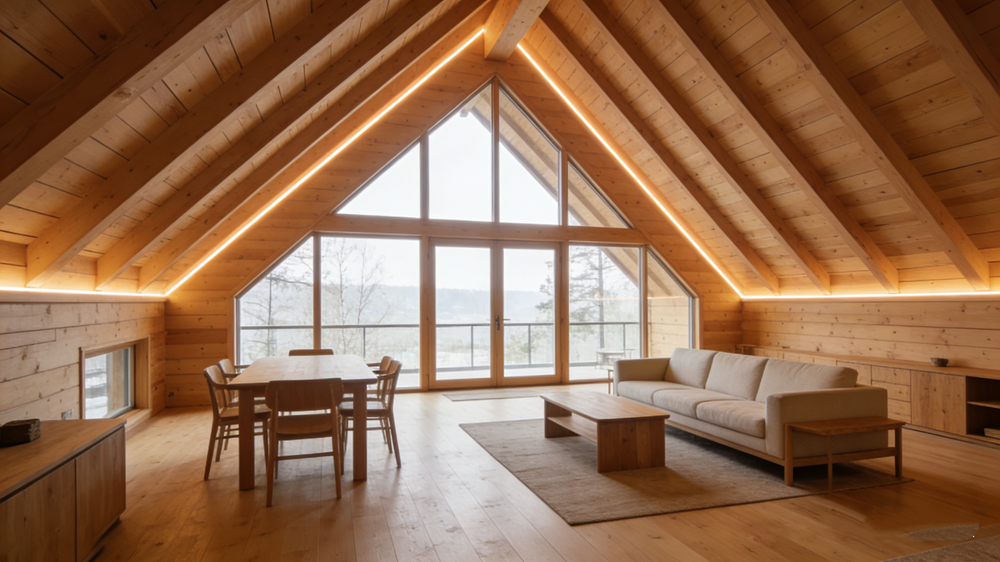
Wooden architecture has a timeless charm. From alpine cabins to modern timber villas, wood creates warmth, texture, and emotional comfort. Naturally, designers often pair wood with warm white LED strip lighting — typically around 2700K — to enhance that cozy atmosphere.
Yet in real-world projects, a common problem appears:
The lighting feels much warmer than expected — sometimes overwhelmingly so.
An LED strip rated at 2700K can visually appear closer to 2000K once reflected off wooden ceilings or walls. What was intended as balanced warm white becomes amber-heavy, overly yellow, or even visually tiring when used as main lighting.
This is not a product defect. It is a design miscalculation.
In this article, we’ll explore why this happens, what risks it creates for interior projects, and how lighting professionals can prevent excessive warmth in wood-dominated spaces.
Table of Contents
The Core Problem: Material-Driven Color Shift
Lighting specifications describe the light source — but not the final visual result.
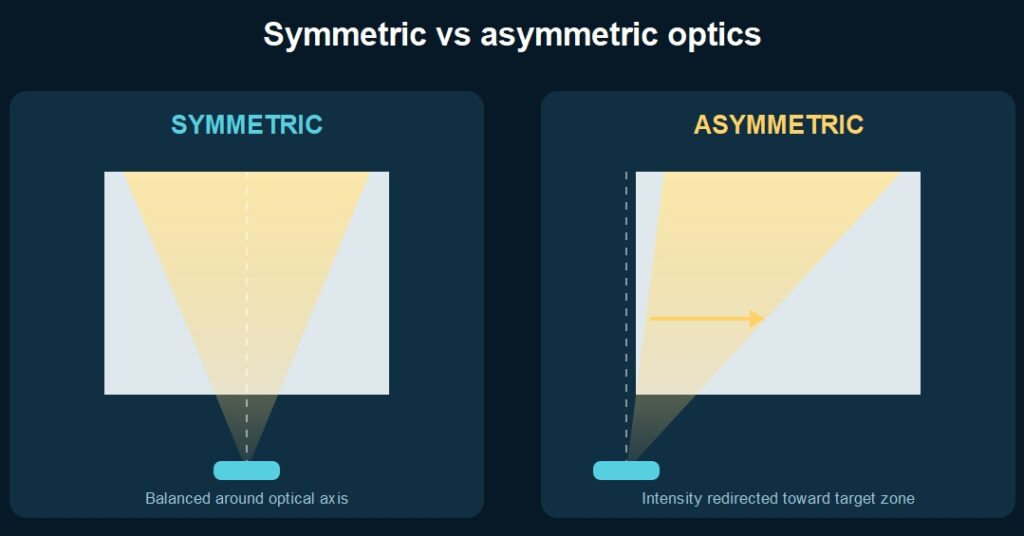
In wooden environments, especially when using indirect lighting (uplighting onto ceilings or walls), the material itself alters the perceived color temperature.
Wood typically:
- Absorbs cooler blue wavelengths
- Reflects more red and yellow tones
- Deepens amber undertones
- Softens overall contrast
When a 2700K LED strip shines directly, it appears standard warm white.
When that same light reflects off pine, oak, or spruce, the visual impression becomes noticeably warmer.
The effect intensifies when:
- The room has a high percentage of exposed wood
- The lighting is indirect
- The ceiling is sloped or reflective
- The lumen output is high
As a result, the perceived color temperature may drop significantly — even 300–700K visually.
This is the core issue designers often underestimate.
Why Indirect Lighting Amplifies the Shift
Indirect lighting is widely used in wooden architecture because it:
- Hides light sources
- Reduces glare
- Creates soft ambient glow
- Highlights structure and beams
However, indirect lighting relies entirely on surface reflection.
In a white plaster room, reflected light remains relatively neutral.
In a timber room, reflection inherits the wood’s pigment.
If the lighting is directed upward onto wooden ceilings:
- The first bounce warms the light.
- The second diffusion spreads that warmth across the room.
- The cumulative effect intensifies amber tones.
This is why a space can feel significantly warmer than expected — even when technical specs seem correct.
When Warm Atmosphere Becomes Functional Discomfort
Warm light is emotionally inviting. It encourages relaxation and intimacy.
But problems arise when warm lighting is used as primary illumination in frequently occupied rooms.
Excessive warmth can cause:
- Reduced visual clarity
- Lower contrast perception
- Difficulty in reading or task performance
- A feeling of visual heaviness
In gallery spaces or lounges used occasionally, this may not matter.
In living rooms, kitchens, offices, or shared family areas, it becomes problematic.
Lighting must support both atmosphere and usability.
When the reflected light visually approaches 2000K:
- White objects appear yellowish
- Skin tones may look overly saturated
- Artwork colors shift
- Food presentation may look distorted
This is where design decisions must shift from emotional preference to functional balance.
The Hidden Risk of High Lumen Output
Many designers compensate for wood’s light absorption by increasing brightness — often selecting LED strips around 1800–2000 lumens per meter.
While this solves illumination levels, it can worsen color warmth perception.
Higher output:
- Increases surface saturation
- Intensifies amber reflection
- Makes color shift more noticeable
Without dimming control, this can lead to an overpowering golden glow.
The issue is not brightness itself.
It is uncontrolled brightness combined with reflective material warmth.
The Solution Part 1: Adjusting Color Temperature Strategically
The most effective solution is not to abandon warm light — but to anticipate reflection effects.
Instead of defaulting to 2700K, consider:
For Indirect Main Lighting in Wooden Spaces:
Choose 3000K.
After reflection, 3000K may visually settle around a comfortable 2700K–2800K, maintaining warmth without excessive amber dominance.
For Accent or Mood Lighting:
2700K remains ideal.
When lighting is layered (main + accent), a warmer strip can create contrast without overwhelming the entire environment.
For Very Yellow or Orange-Toned Wood:
Even 3200K may produce balanced results after reflection.
Material tone must influence CCT selection.
The Solution Part 2: Layered Lighting Instead of Single Source
One of the biggest design mistakes in timber architecture is relying solely on indirect cove lighting as the primary source.
A more balanced strategy includes:
- Indirect ceiling glow
- Discreet downlights for clarity
- Task lighting in functional areas
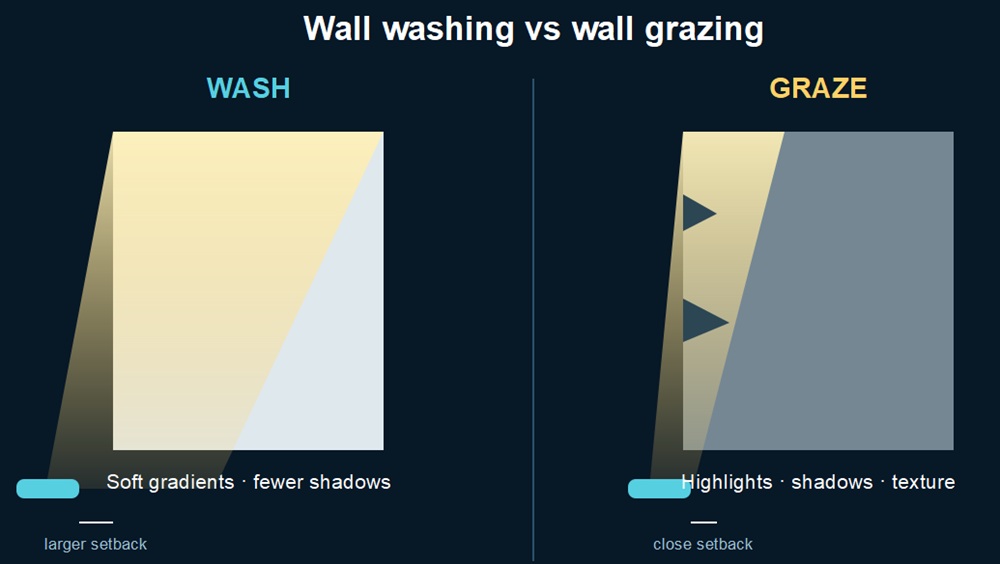
- Wall washing to create vertical brightness
Layered lighting reduces reliance on one color temperature dominating the room.
It also prevents over-warming by introducing controlled neutral accents.
When different layers serve different purposes, the environment feels intentional rather than accidental.
The Solution Part 3: Dimming and Control Systems
Dimming is not optional in wooden lighting projects — it is essential.
Why?
Because perceived warmth increases with brightness.
At 100% output:
- Amber saturation feels strong
- Visual heaviness increases
At 60–70%:
- Warmth softens
- Atmosphere becomes balanced
- Comfort improves
Smart dimming allows the same installation to function as:
- Soft evening mood lighting
- Brighter daytime support
- Adjustable event atmosphere
Without dimming, even correctly selected CCT may feel excessive.
The Solution Part 4: Tunable White for Complex Spaces
In spaces with mixed usage (living + dining + working), fixed CCT can limit flexibility.
Tunable white LED strips (for example 2400K–4000K range) provide adaptive control:
Morning:
- Slightly cooler for clarity
Evening:
- Warmer for comfort
Event or gathering:
- Adjust based on mood
In wood-heavy architecture, tunable systems prevent costly reinstallation if the initial warmth calculation proves too strong.
They provide insurance against reflection misjudgment.
The Solution Part 5: Consider Wood Species and Finish
Not all wood behaves the same.
Light pine reflects differently than dark walnut.
Key factors influencing warmth amplification:
- Wood color depth
- Grain density
- Surface finish (matte vs glossy)
- Age of material
- Varnish or oil treatment
Glossy finishes increase reflection intensity.
Matte finishes absorb more light.
Before finalizing CCT, testing samples against actual materials is highly recommended.
Lighting decisions should be made in the real environment — not solely based on catalog specifications.
The Role of High CRI in Maintaining Balance
When dealing with potential warmth overload, high CRI (≥90) becomes even more important.
High CRI ensures:
- Natural wood tones remain accurate
- Subtle grain variations are preserved
- Color distortion is minimized
If CRI is low, warm reflection combined with poor color rendering can create muddy or overly saturated visual results.
High-quality LED strips preserve material authenticity even under warm lighting.
Practical Design Recommendations
For professionals working with timber architecture:
- Test CCT in actual space before final decision.
- Consider 3000K for indirect main lighting.
- Use 2700K for accent layers only.
- Always include dimming capability.
- Avoid extremely low CCT (<2400K) as main source.
- Evaluate brightness carefully — more lumens are not always better.
- Consider tunable white for multifunctional rooms.
The key principle:
Design for reflection, not just emission.
The Bigger Lesson: Lighting Is a System, Not a Number
Color temperature printed on a datasheet describes laboratory conditions.
But architecture is not a laboratory.
Light interacts with:
- Material
- Geometry
- Surface color
- Human perception
- Usage pattern
In wooden interiors, these variables significantly influence final visual outcome.
When warmth becomes excessive, the solution is rarely replacing the wood.
The solution lies in recalibrating:
- CCT
- Brightness
- Layering
- Control systems
Understanding this interaction separates average lighting projects from exceptional ones.
Conclusion
Wood and warm light are natural partners — but they must be carefully balanced.
An LED strip rated at 2700K can visually behave like 2000K once reflected across a timber ceiling. What feels cozy in concept may become overly amber in practice.
The problem is not the LED strip itself.
The problem is underestimating material influence.
By:
- Choosing slightly higher CCT for indirect main lighting
- Using layered illumination strategies
- Integrating dimming control
- Considering tunable white solutions
- Evaluating wood tone before final selection
Designers and contractors can maintain warmth without sacrificing comfort or functionality.
In wooden architecture, success lies not in making light warmer —
but in making it balanced.
Other articles:
Warm Light Transforms Wooden Spaces
CRI, SDCM & Color Binning Explained
As a bespoke lighting solution provider, Yiholight specializes in high-quality LED strips and neon flex lights. Our products are engineered for durability, brightness, and ease of installation—trusted by B2B customers across the globe.
Contact us today to explore the best LED lighting for your business!
© [Yiholight] and [www.yiholight.com]. Unauthorized use or duplication of this material is strictly prohibited without express written permission from the site’s author or owner. Excerpts and links may be used, provided full, clear credit is given to [Yiholight] and [www.yiholight.com], with appropriate, specific direction to the original content.