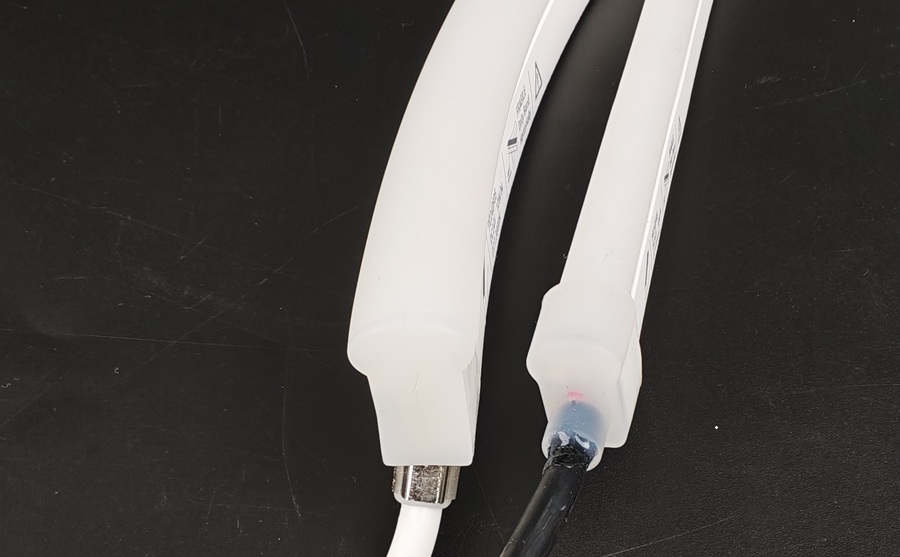
What Is a Silicone Neon End Cap?
A traditional silicone neon end cap is a separate silicone component installed after cutting the LED neon flex.
During production or installation, the installer usually needs to:
- Cut the LED neon strip according to the required length
- Insert wires or connectors
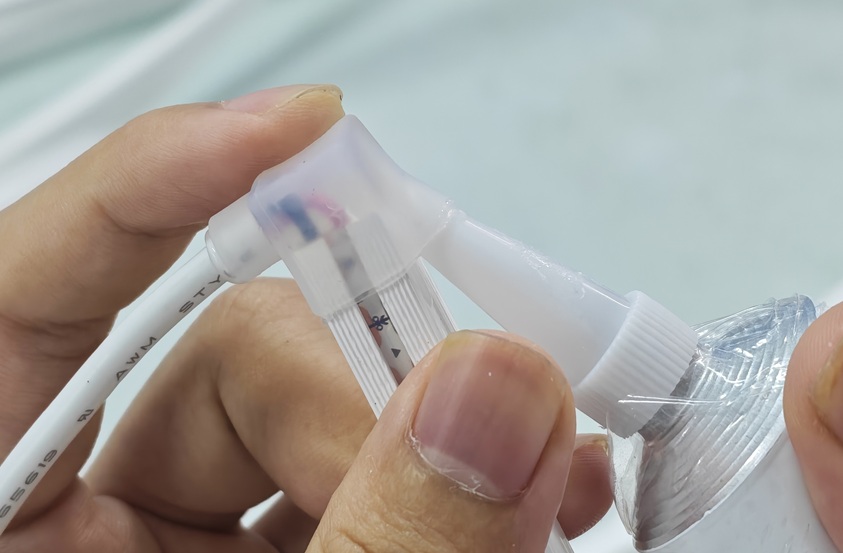
- Apply silicone glue inside the end cap
- Fix the end cap onto the neon housing
- Wait for curing before outdoor installation
This method has been widely used because of its simple structure and relatively low cost.
Advantages of Silicone Neon End Caps
Flexible and Easy Installation
The separate end cap design allows installers to cut LED neon flex freely on-site.
For projects requiring different lengths, curves, or customized shapes, silicone end caps provide installation flexibility.
Lower Initial Cost
Compared with integral solutions, traditional silicone neon end caps usually have lower material costs.
For price-sensitive projects, such as basic decorative lighting or indoor applications, this solution can still be practical.
Suitable for Small Quantity Projects
For small projects, temporary installations, or applications without strict waterproof requirements, silicone end caps remain a common choice.
Limitations of Traditional Silicone Neon End Caps
Although silicone end caps are widely used, they also have several limitations, especially for outdoor and long-term projects.
Waterproof Performance Depends on Installation Quality
The biggest challenge of silicone end caps is that waterproof performance relies heavily on manual installation.
The installer needs to ensure:
- Enough silicone glue is applied
- The glue fully covers the internal gap
- No air bubbles remain
- The end cap is correctly positioned
Any small mistake may create a potential water leakage point.
For professional outdoor lighting projects, inconsistent installation quality can become a major risk.
Silicone Glue Aging Problem
Over time, silicone glue may experience:
- UV exposure
- Temperature changes
- Expansion and contraction
- Material aging
After several years outdoors, the adhesive area may shrink or crack, creating gaps between the end cap and silicone housing.
This is especially important in regions with:
- Strong sunlight
- Large temperature differences
- Heavy rain environments
Appearance Issues After Long-Term Use
Traditional end caps usually create a visible connection area.
After years of outdoor exposure, problems may appear:
- Glue marks
- Color difference
- Silicone shrinkage
- Visible internal LED components
For premium architectural lighting projects, these details can affect the overall appearance.
What Is an integral Neon Flex End Cap?
An integral LED neon flex end cap is manufactured as part of the silicone extrusion process.
Instead of adding a separate silicone cap after cutting, the sealing structure is designed together with the neon housing.
The end section becomes a continuous silicone structure, reducing additional connection points.
This design is increasingly adopted in high-end outdoor lighting applications.
Advantages of integral Neon Flex End Cap Design
Better Waterproof Reliability
The biggest advantage of integral sealing is reducing potential leakage points.
Because the silicone housing and end sealing structure are designed as one system:
- No additional mechanical connection
- No dependence on manual glue application
- Better sealing consistency
This provides more reliable protection for outdoor applications.
For projects requiring IP67 waterproof LED neon flex, integral end cap solutions offer stronger long-term confidence.
Improved Outdoor Durability
Outdoor lighting systems are exposed to:
- Rainwater
- UV radiation
- Temperature cycles
- Humidity
A fully integral silicone structure reduces the risk caused by material expansion and contraction.
Compared with traditional glued end caps, integral designs provide better stability during long-term operation.
Cleaner Appearance
For architectural lighting, appearance is extremely important.
integral end caps provide:
- Smooth transition
- Cleaner installation
- Less visible glue
- Better visual consistency
This is especially suitable for:
- Building facade lighting
- Hotel lighting
- Landscape projects
- Premium signage
- Retail decoration
Better Quality Consistency for Mass Projects
For distributors, lighting brands, and OEM customers, consistency is critical.
Traditional silicone end caps may depend on different installers and different installation methods.
integral solutions allow manufacturers to control:
- Sealing structure
- Production process
- Waterproof performance
This helps ensure stable quality across thousands of meters of LED neon flex production.
Silicone Neon End Cap vs integral End Cap Comparison
|
Comparison |
Silicone Neon End Cap |
integral Neon Flex End Cap |
|
Structure |
Separate silicone accessory |
One-piece silicone structure |
|
Installation |
Requires manual sealing |
Ready-made sealing design |
|
Waterproof reliability |
Depends on glue quality |
More consistent |
|
Outdoor durability |
Medium |
Higher |
|
Risk of leakage |
Higher |
Lower |
|
Appearance |
Possible glue marks |
Cleaner finish |
|
Production consistency |
Depends on operator |
More stable |
|
Cost |
Lower |
Higher |
|
Recommended applications |
Indoor / basic outdoor |
Premium outdoor projects |
Manual sealing as below:
Which LED Neon Flex End Cap Solution Should You Choose?
The right solution depends on the application requirements.
Choose Silicone Neon End Cap When:
- The project is mainly indoor
- Budget is the priority
- Installation quantity is limited
- Waterproof requirements are moderate
Examples:
- Indoor decorative lighting
- Furniture lighting
- Exhibition displays
- Temporary installations
Choose integral Neon Flex End Cap When:
- The project requires long-term outdoor reliability
- The lighting will face rain and UV exposure
- Maintenance cost needs to be minimized
- Appearance quality is important
Examples:
- Building facade lighting
- Hotels and clubs
- Landscape lighting
- Outdoor signage
- Architectural linear lighting
The Future Trend of LED Neon Flex Waterproof Design
As LED neon flex applications continue expanding from decorative lighting into architectural and commercial projects, customers are paying more attention to:
- Long lifespan
- Waterproof reliability
- Installation efficiency
- Maintenance reduction
The market is moving from simple silicone accessories toward more integral and professional sealing solutions.
For lighting brands, distributors, and project contractors, choosing a reliable LED neon flex manufacturer with advanced sealing technology can significantly reduce project risks.
Conclusion: integral End Cap Provides Higher Reliability for Professional Projects
Both silicone neon end caps and integral end caps have their own application scenarios.
Traditional silicone end caps remain a cost-effective solution for basic applications. However, for demanding outdoor projects requiring long-term durability, consistent waterproof performance, and premium appearance, integral LED neon flex end caps provide a more reliable solution.
Other articles:
The Ultimate Guide to LED Neon Flex Strip
IP65 vs IP67 vs IP68 LED Neon Flex: What’s the Difference?
Common LED Neon Flex Problems and Solutions
How to Install LED Neon Flex: Step-by-Step Guide
As a bespoke lighting solution provider, Yiholight specializes in high-quality LED strips and neon flex lights. Our products are engineered for durability, brightness, and ease of installation—trusted by B2B customers across the globe.
Contact us today to explore the best LED lighting for your business!
© [Yiholight] and [www.yiholight.com]. Unauthorized use or duplication of this material is strictly prohibited without express written permission from the site’s author or owner. Excerpts and links may be used, provided full, clear credit is given to [Yiholight] and [www.yiholight.com], with appropriate, specific direction to the original content.