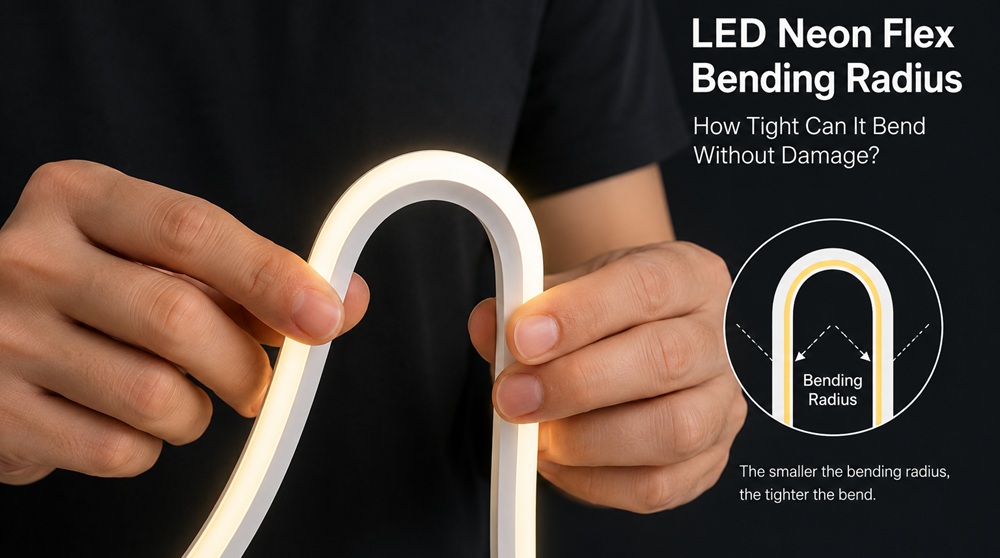
When it comes to modern lighting design, LED neon flex has become a versatile and popular choice for both commercial and residential projects. Its flexibility, durability, and even illumination make it ideal for signage, architectural lighting, RV interiors, gaming cabinets, furniture, and decorative installations. However, one of the most critical technical aspects that installers and designers must understand is the bending radius. Bending LED neon flex incorrectly can cause damage that reduces its lifespan and affects lighting performance.
In this article, we will explore what bending radius is, why it matters, the different bending directions, and practical tips to install LED neon flex safely without compromising its integrity.
Table of Contents
What Is LED Neon Flex Bending Radius?
The bending radius refers to the smallest curve into which a neon flex can safely bend without damaging the internal components. Unlike traditional neon or rigid LED strips, neon flex consists of a flexible PCB encapsulated in silicone or PVC, which allows bending but still has limits.
The bending radius is measured from the center of the curve, not the edge of the strip. Exceeding this limit can cause several issues:
- Cracked PCB or broken solder joints
- LED failure or flickering
- Silicone deformation or permanent kinks
- Compromised waterproofing
- Uneven light distribution
- Shortened lifespan of the neon flex
For example, if a product has a minimum bending radius of 50mm, this means the neon flex should never be bent into a circle with a diameter smaller than 100mm. Respecting this limit ensures the LED neon flex maintains both performance and durability.
Why Bending Radius Matters
Understanding bending radius is essential for both installers and designers. Many people are tempted to force neon flex into very tight curves, especially for intricate signage, channel letters, or logos. However, improper bending can cause:
- Mechanical Stress– Tight bends strain the internal copper PCB, which can lead to cracks and breakage.
- Light Leakage or Shadowing– The silicone housing may fold, creating dark spots along the strip.
- Waterproofing Failure– Many neon flex options are IP65–IP68 rated; tight bending can compromise the seal, leading to water or dust ingress.
- Shortened Lifespan– Even if no visible damage occurs immediately, the stress reduces the product’s long-term reliability.
By designing with the correct bending radius, you avoid installation headaches and guarantee the neon flex will last for years, even in demanding environments like outdoor signage or humid locations.
Two Bending Directions: Top Bend vs. Side Bend
It is important to note that LED neon flex does not bend equally in all directions. There are two main bending types: top bend (vertical) and side bend (horizontal). Each has its applications and limitations.
1. Top Bend Neon Flex
Top bending refers to bending the strip up or down. This is common for:
- Signage letters
- Decorative contours
- Curved outlines
Top bending is generally safer and allows a tighter bending radius because the internal PCB and LEDs experience less lateral stress. Typical minimum bending radius for top bend neon flex ranges from 30mm to 60mm, depending on the product’s width, PCB thickness, and silicone hardness.
Tip: Avoid twisting the strip while performing a top bend, as twisting can still damage the internal components.
2. Side Bend Neon Flex
Side bending involves bending the strip left or right, along its flat plane. This is commonly used for:
- Narrow channel letters
- Tight curves in logos or symbols
- Compact installations where vertical bending is not possible
Side bends are more restrictive because the LEDs and PCB are stretched laterally. Minimum bending radius for side bends is typically larger than top bends, usually around 50mm to 80mm, depending on product specifications.
Tip: Always check the manufacturer’s datasheet for maximum side bend limits to prevent LED failure or silicone deformation.
Factors Affecting LED Neon Flex Bending Radius
Several factors influence how tightly a neon flex can be bent without damage:
- Strip Width– Wider neon flex is less flexible and requires a larger bending radius.
- LED Type– COB and SMD LEDs may have different tolerances for bending.
- Silicone Thickness– Thicker silicone housings are more durable but less flexible.
- PCB Thickness– A thicker PCB improves durability but reduces flexibility.
- Ambient Conditions– Temperature fluctuations can make silicone more rigid or soft, affecting bending limits.
By understanding these factors, you can choose the right LED neon flex for your specific installation and ensure proper handling during bending and mounting.
Practical Tips for Safe Bending
To maximize both safety and aesthetics when working with LED neon flex:
- Plan the Layout: Before installation, measure curves and corners to ensure the bending radius is respected.
- Use Mounting Clips: Secure the neon flex with clips instead of forcing it into shape.
- Avoid Sharp Bends: Always maintain at least the minimum radius. If needed, divide curves into multiple smaller angles rather than one tight bend.
- Heat Carefully: For extreme curves, mild heat can increase silicone flexibility, but avoid overheating, which can damage LEDs.
- Test First: Before final installation, bend a short piece to check for potential issues.
LED Neon Flex vs. Regular Flexible LED Strip
While regular flexible LED strips can bend along their thin PCB, they usually do not tolerate tight curves as well as silicone-encased neon flex. Neon flex offers:
- Smooth, continuous illumination
- Waterproof protection (IP65–IP68)
- Higher durability
- Ability to safely bend around corners when the bending radius is respected
This makes LED neon flex ideal for high-end signage, architectural contours, or any installation requiring continuous light around curves.
Conclusion
The bending radius of LED neon flex is a crucial factor for both design and installation. Respecting the minimum bending radius ensures:
- Long-term performance
- Even light distribution
- Prevention of PCB or LED damage
- Integrity of waterproofing
Remember that top bends allow tighter curves than side bends, and product specifications vary by width, silicone thickness, and LED type. By planning carefully and following manufacturer guidelines, you can achieve stunning curved lighting designs without compromising durability.
Whether you’re creating LED neon flex signs, decorating furniture, or integrating flexible LED strips into intricate designs, understanding and respecting the bending radius is key to success.
Other articles:
Side Bending vs Top Bending LED Neon Flex
How to Choose the Right LED Neon Flex
360° Round LED Neon Flex: Applications and Benefits
As a bespoke lighting solution provider, Yiholight specializes in high-quality LED strips and neon flex lights. Our products are engineered for durability, brightness, and ease of installation—trusted by B2B customers across the globe.
Contact us today to explore the best LED lighting for your business!
© [Yiholight] and [www.yiholight.com]. Unauthorized use or duplication of this material is strictly prohibited without express written permission from the site’s author or owner. Excerpts and links may be used, provided full, clear credit is given to [Yiholight] and [www.yiholight.com], with appropriate, specific direction to the original content.