When choosing an addressable LED strip, most buyers first look at LED density, voltage, RGB or RGBW, and brightness.
But for a digital lighting project, one decision is just as important:
Should you use SPI or DMX control?
Both technologies can create dynamic effects such as chasing, flowing colors, gradients and programmed animations. However, they are designed around different control architectures and are better suited to different types of projects.
For a retail display, illuminated logo or entertainment installation, an SPI LED strip may provide the flexibility and pixel density you need.
For an architectural facade, stage system or project that must integrate with an existing professional lighting network, a DMX LED strip may be the better choice.
Understanding the difference before selecting the strip can save significant time during controller selection, wiring and commissioning.
Table of Contents
What Is an SPI LED Strip?
SPI stands for Serial Peripheral Interface.
In digital LED lighting, SPI is commonly used to send data from a controller to ICs installed along an addressable LED strip.
Each IC controls one LED or a group of LEDs, depending on the strip design.
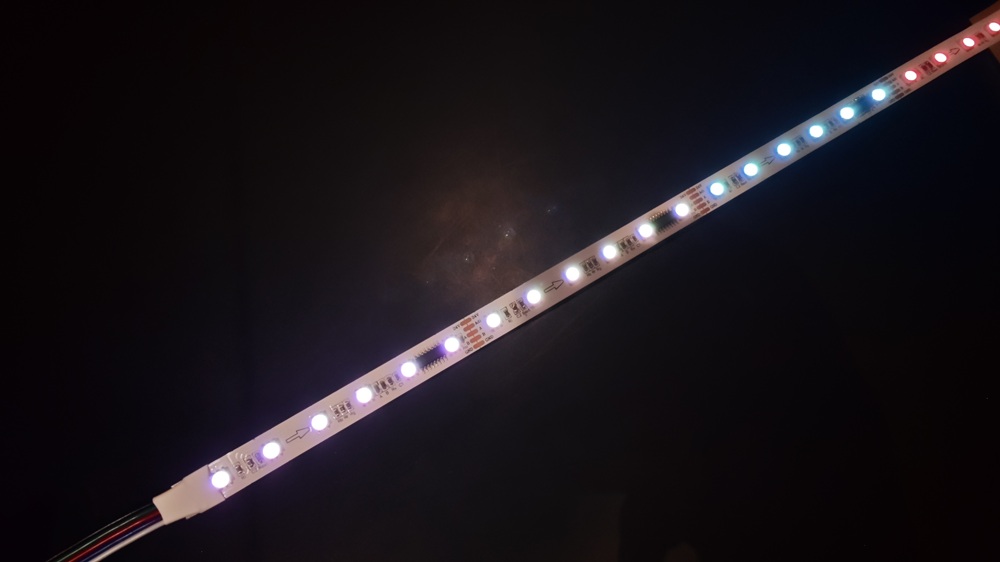
This allows multiple pixels along the same strip to display different colors at the same time.
For example, a 5-meter SPI RGB strip can create:
- Chasing effects
- Flowing colors
- Rainbow gradients
- Sequential lighting
- Pixel animations
- Music-synchronized effects
SPI pixels use digital data rather than the conventional constant-voltage RGB method where the whole strip normally responds together.
Common SPI IC families used in addressable lighting include:
- WS2811
- UCS1903
- UCS2904
- SK6812
- GS8206
Each IC has its own data protocol, voltage requirements and pixel architecture.
This means an SPI controller must support the specific IC used in the strip.
What Is a DMX LED Strip?
DMX512 is a widely used lighting-control standard, especially in professional stage, entertainment and architectural lighting.
A standard DMX universe contains 512 control channels.
In RGB lighting, one RGB pixel normally requires three channels:
- Red
- Green
- Blue
An RGBW pixel normally requires four:
- Red
- Green
- Blue
- White
DMX-based digital strips use addressable ICs designed to interpret DMX-compatible control data.
For example, YIHOLIGHT offers a 24V 5050 RGBW digital strip using the UCS512C4 DMX512 IC, with 60 LEDs per meter and 10 controllable pixels per meter.
DMX is particularly attractive when the LED strip needs to become part of a larger professional control system.
SPI vs DMX LED Strip: The Main Difference
The most important distinction is not simply the signal type.
It is the system architecture.
An SPI LED strip is commonly controlled directly by a dedicated pixel controller.
The controller sends the protocol required by the strip IC.
A DMX system is usually designed around a more standardized lighting-control environment, where multiple fixtures, addresses and lighting zones can be managed through DMX controllers, consoles or network gateways.
In many professional pixel systems, DMX, Art-Net or sACN may also be used at the system level and then converted by a pixel controller into the specific SPI protocol required by the strip.
A simple way to think about the difference is:
SPI = direct pixel control
DMX = standardized professional lighting control
Neither is automatically better.
The right choice depends on how the project needs to operate.
Pixel Density and Dynamic Effects
SPI is extremely common in high-density pixel lighting.
Many SPI strips allow one LED or a small group of LEDs to function as an individual pixel.
This means every LED can act as a separately controlled pixel.
That level of control can produce very smooth:
- Chasing effects
- Color gradients
- Running animations
- Pixel-mapped patterns
SPI is therefore highly suitable when animation quality and pixel resolution are priorities.
DMX LED strips can also create dynamic effects, but the practical pixel quantity must be considered together with channel capacity and control-system architecture.
Controller Compatibility
Controller selection is especially important with SPI.
An SPI strip using WS2811 does not automatically use exactly the same communication protocol as every other addressable IC.
Therefore, before selecting a controller, confirm:
- IC model
- Signal type
- Pixel quantity
- Output capacity
- Voltage
- Maximum supported pixels
This is why an addressable LED strip should never be selected independently from the controller.
DMX systems offer a more standardized control environment.
If the project already uses:
- DMX512
- Art-Net
- sACN
- Professional lighting consoles
- Building lighting controllers
a DMX-compatible strip or DMX decoder architecture may simplify integration.
Project Scale
For small and medium-sized installations, SPI can be extremely efficient.
Typical examples include:
- Retail displays
- Illuminated logos
- KTV interiors
- Gaming rooms
- Exhibition booths
- Decorative ceilings
- Signage
- Small entertainment installations
A dedicated SPI controller can store or generate effects and send data directly to the strips.
For larger systems, however, the overall architecture becomes more important.
A building facade may contain hundreds or thousands of pixels distributed across multiple sections.
In this case, professional protocols such as DMX, Art-Net or sACN can make the system easier to organize into universes, zones and controllers.
This is one reason DMX remains widely used in professional architectural and entertainment lighting.
Wiring and Signal Distance
Signal planning becomes increasingly important as digital installations become larger.
SPI is generally designed as a local data connection between a controller and pixel ICs.
For longer installations, designers may need to consider:
- Controller-to-strip distance
- Signal amplification
- Ground reference
- Cable quality
- Data direction
- Multiple controller outputs
Power distribution must also be planned separately.
DMX uses a differential signaling architecture designed for professional lighting networks and is generally more suitable for longer control runs between equipment.
That does not mean an entire LED strip can simply be powered and controlled over an unlimited distance.
Power injection and voltage drop still need to be calculated independently.
Addressing
One advantage of professional DMX systems is address management.
Each fixture or DMX pixel range can be assigned control addresses.
This makes it easier to organize multiple lighting elements within a larger system.
For architectural installations, this can be valuable because the project may include:
- Wall washers
- Linear lights
- Pixel strips
- Spotlights
- Media facadeelements
under one control environment.
SPI systems normally work differently.
Pixels are generally controlled according to their sequence along the data chain.
Pixel 1 receives the first data set, Pixel 2 receives the next, and so on.
This is often very convenient for linear animations but uses a different programming logic from conventional fixture-based DMX addressing.
RGB vs RGBW
Both SPI and DMX systems can support RGB or RGBW.
RGB uses three color channels:
R + G + B
RGBW adds a dedicated white channel:
R + G + B + W
RGBW is particularly useful in projects where the same lighting system needs to provide both:
- Dynamic colorful effects
- Practical white illumination
For example, a hotel feature wall may operate in white during normal business hours and switch to dynamic color scenes during events.
YIHOLIGHT’s digital range includes both SPI and DMX RGB/RGBW configurations, including SK6812, WS2811, UCS1903H and UCS512C4 options.
When Should You Choose SPI LED Strip?
SPI is usually a strong choice when the project requires:
- High pixel density
- Smooth chasing effects
- Complex animations
- Compact controllers
- Flexible customization
- Cost-effective pixel control
- Signage or display integration
Typical applications include:
Signage
Digital strips can create moving outlines, gradients and sequential effects around letters and logos.
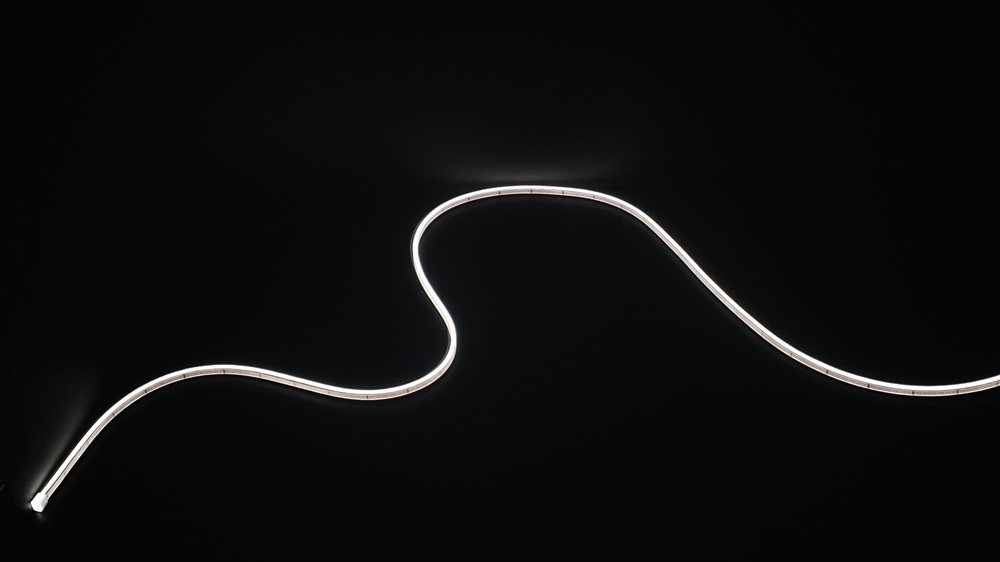
For curved signage, an S Shape SPI RGB LED Strip can combine side-bending flexibility with programmable pixel control. YIHOLIGHT already uses this approach for curved signs and creative displays.
Retail Displays
SPI strips can be integrated into shelves, brand displays and product-launch installations where movement attracts attention.
Entertainment
KTVs, gaming rooms, clubs and event installations often use SPI because of its ability to generate dense, fast-moving pixel effects.
Interactive Lighting
Pixel-mapping software and dedicated controllers can turn SPI strips into programmable visual elements rather than simple decorative lighting.
When Should You Choose DMX LED Strip?
DMX becomes particularly attractive when the project requires:
- Integration with professional lighting systems
- Long control networks
- Fixture addressing
- Centralized control
- Architectural lighting
- Stage or event infrastructure
- Synchronization with other DMX fixtures
Typical applications include:
Architectural Facades
A facade may combine RGBW wall washers, linear lights and pixel strips.
Using DMX architecture can make it easier to coordinate these fixtures within one lighting system.
Stage Lighting
DMX is already standard across much of the professional stage-lighting industry.
Using DMX-compatible pixel lighting can simplify synchronization with moving lights, spotlights and other stage equipment.
Hotels and Commercial Buildings
Where a central control system is required, DMX can provide a more structured approach than a standalone pixel controller.
SPI vs DMX: Quick Comparison
|
Factor |
SPI LED Strip |
DMX LED Strip |
|
Pixel density |
Excellent |
Good to excellent |
|
Complex animations |
Excellent |
Excellent |
|
Controller simplicity |
Often simpler |
More system-oriented |
|
Professional system integration |
Moderate |
Excellent |
|
Long control networks |
Requires planning |
Better suited |
|
Address management |
Sequential pixels |
DMX addressing |
|
Cost for small projects |
Often lower |
Often higher |
|
Architectural integration |
Good |
Excellent |
|
Signage / display use |
Excellent |
Possible |
|
Stage / professional lighting |
Good |
Excellent |
The table should be treated as a general guide rather than an absolute rule.
The complete system design matters more than the protocol name alone.
What Should You Confirm Before Ordering?
Before selecting either an SPI or DMX addressable LED strip, confirm the following:
1. Required Lighting Effect
Do you need simple chasing, high-resolution pixel animation or synchronization with multiple fixtures?
2. Pixel Quantity
Do not confuse LED quantity with pixel quantity.
A strip may contain 120 LEDs/m but only 10 controllable pixels/m.
3. IC Model
The IC determines controller compatibility and communication protocol.
4. Voltage
Digital strips are available in different voltages including 5V, 12V and 24V.
Longer projects often benefit from higher-voltage architectures because voltage drop can be easier to manage.
5. Controller
Make sure the controller supports:
- IC protocol
- Pixel count
- Required output quantity
- Programming method
6. Power Distribution
Digital control does not eliminate normal electrical limitations.
Large installations still require correct:
- Power supply sizing
- Cable sizing
- Voltage-drop calculation
- Power injection
7. Future Integration
Consider whether the strip will remain a standalone effect or eventually need to connect with a larger lighting-control system.
This can influence whether SPI or DMX is the better long-term choice.
So, Is SPI or DMX Better?
For many standalone pixel strip applications, SPI is the more flexible and economical solution.
It is particularly strong for:
- High-density pixel effects
- Signage
- Retail displays
- Entertainment
- Creative installations
For larger professional systems where integration, addressing and centralized lighting control matter more, DMX is often the better architecture.
It is especially suitable for:
- Building facades
- Stage systems
- Hotels
- Large commercial installations
- Multi-fixture lighting projects
The most important point is that the control protocol should be selected together with the LED strip, controller and complete system architecture.
Need Help Choosing Between SPI and DMX?
YIHOLIGHT provides programmable LED strip solutions using multiple IC and control architectures.
Available options include:
- Digital RGB LED Strip
- Digital RGBW LED Strip
- SPI Pixel LED Strip
- DMX512 LED Strip
- 5V / 12V / 24V configurations
- SK6812
- WS2811
- UCS1903
- UCS512C4
- Customized pixel density
- Controller matching
If you are developing a signage, entertainment, retail or architectural lighting project, send us your:
- Required effect
- Installation length
- RGB or RGBW requirement
- Voltage
- Pixel density
- Control system
We can help evaluate whether SPI, DMX or a combined system architecture is more suitable for your project.
Learn more:
Digital RGB and RGBW LED Strip: A Guide to Addressable Pixel Lighting
Addressable LED Strip IC Guide: WS2811, UCS1903, UCS2904, UCS512 and More
How to Choose a Controller for SPI Addressable LED Strips
→Explore Digital RGB & RGBW LED Strip
As a bespoke lighting solution provider, Yiholight specializes in high-quality LED strips and neon flex. Our products are engineered for durability, brightness, and ease of installation—trusted by B2B customers across the globe.
Contact us today to explore the best LED lighting for your business!
© [Yiholight] and [www.yiholight.com]. Unauthorized use or duplication of this material is strictly prohibited without express written permission from the site’s author or owner. Excerpts and links may be used, provided full, clear credit is given to [Yiholight] and [www.yiholight.com], with appropriate, specific direction to the original content.