Conventional neon flex creates a clean, continuous line of light, but its profile can be too large for furniture, narrow grooves, display edges and detailed interior contours. **Slim neon flex** solves this problem by combining a miniature silicone body with smooth, dot-free illumination. It gives designers a more integrated alternative to visible LED tape when installation space is limited.
Choosing an ultra-slim product is not only about selecting the smallest size. The correct option must match the bending direction, groove dimensions, cut interval, light output, environmental protection, cable exit and required mounting method. A 3×6 mm side-bend strip and a 6×6 mm top-bend strip may appear similar in a catalogue, but they create curves in different planes and are not interchangeable.
This guide explains where slim LED neon works best and how to select among four compact formats: side-bend 0306, side-bend 0408, side-bend 0612 and top-bend 0606.
Table of Contents
What Is Slim Neon Flex?
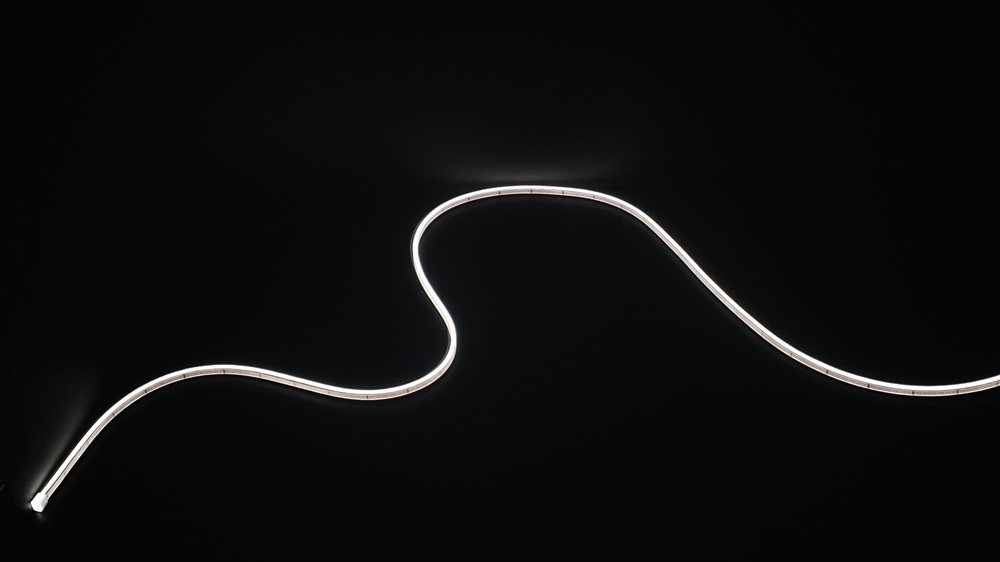
Slim neon flex is a compact linear lighting product in which LEDs and a flexible circuit are enclosed in a narrow silicone profile. The silicone optical structure diffuses the individual LED sources, producing a more continuous appearance than an uncovered LED strip.
Yiholight’s slim neon range includes nominal profiles from 3×6 mm to 6×12 mm. These products use DC24V and are designed for details where conventional 10×10 mm, 12×12 mm or 16×16 mm neon may appear too heavy. Typical applications include:
– cabinet and wardrobe lighting
– shelving and display-case edges
– furniture outlines and recessed grooves
– retail fixtures and product displays
– illuminated letters and compact signage
– curved decorative contours
– integrated light lines in walls, ceilings and joinery
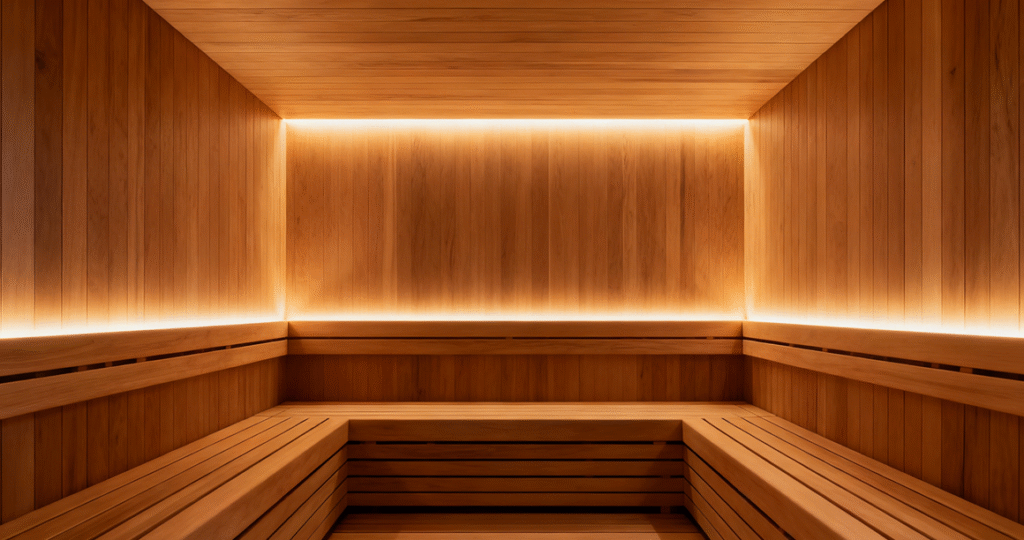
The main benefit is visual integration. Instead of designing the furniture or architectural detail around a bulky luminaire, the lighting can follow the detail itself.
Slim Neon Flex vs Standard LED Strip
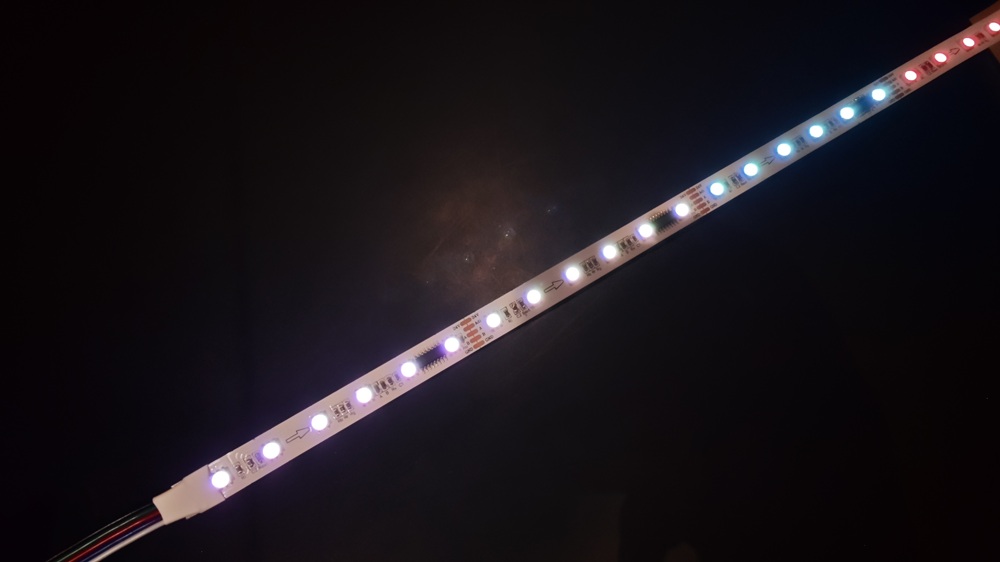
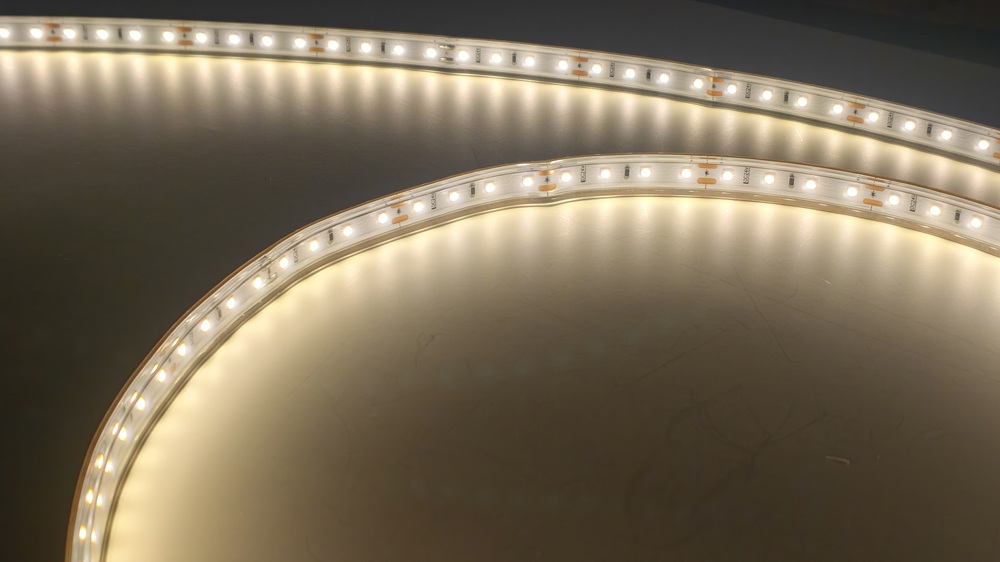
An LED strip is extremely thin and may offer higher luminous output per watt, but individual LEDs can remain visible unless it is installed in a sufficiently deep profile with a diffuser. Slim neon incorporates its own diffusing optical body, making it useful when the source is visible or a continuous luminous outline is required. It should be selected for form factor, uniformity and integration—not for wattage alone.
Side Bend vs Top Bend: The Most Important Decision
The terms **side bend** and **top bend** describe the plane in which the neon can curve safely.
A side-bend product curves horizontally when the light-emitting surface faces the viewer. It is suitable for flowing outlines, lettering, furniture contours and plan-view curves. Yiholight’s S0306, S0408 and S0612 are side-bend options.
A top-bend product curves up and down relative to its light-emitting surface. It is useful for vertical contours, arches, shelving transitions and details that change height. The T0606 is a compact top-bend option.
Do not twist one type to imitate the other. Torsion can damage the circuit and silicone body. Before ordering, draw the curve and mark the illuminated face.
When to Choose Side Bend 0306
At approximately 3×6 mm, S0306 is the smallest profile in the group. It is suited to ultra-narrow grooves, delicate display edges, miniature signage and furniture details where the lighting should remain visually discreet.
Its 25 mm cut unit allows more precise length adjustment than a 50 mm cut interval. That can be important when a strip must end neatly inside a short shelf or custom fixture. The nominal minimum bend diameter is 30 mm, but the installer should never force a tighter curve or bend directly beside an end termination.
Groove dimensions, end-cap clearance and cable routing should be checked with a sample before machining furniture in volume.
When to Choose Side Bend 0408
S0408 offers a slightly larger 4×8 mm body while remaining suitable for narrow interior details. Compared with 0306, the larger section can be easier to handle and mount, while still appearing much lighter than conventional neon flex.
It is a balanced choice for cabinets, wardrobes, shelves and retail fixtures that need a continuous line without the absolute smallest profile. Its 50 mm cut unit should be coordinated with the furniture module before production.
Both S0306 and S0408 are listed as IP44 in their integral-end-cap configuration. The catalogue also shows separate silicone end-cap options associated with higher protection. Do not assume the body rating automatically applies to every cut and connection: the rating of the completed assembly depends on the termination and sealing method.
When to Choose Side Bend 0612
S0612 is the most robust and versatile side-bend option in this slim group. Its 6×12 mm profile is still compact, but it provides 5 W/m and 10 W/m configurations, IP67 construction, and front, side or bottom cable exits. The catalogue also lists single colour, tunable white, RGB and RGBW possibilities.
This makes 0612 suitable for larger contours, signage and projects needing more connection flexibility. It can use mounting clips, a straight profile or a moldable carrier, depending on the required line.
The higher IP rating does not by itself guarantee suitability for every outdoor, wet or submerged installation. Confirm the end cap, cable joint, installation orientation, chemicals, drainage and project warranty as a complete system.
When to Choose Top Bend 0606
T0606 uses a square 6×6 mm profile and bends in the top-bend plane. It is intended for compact vertical curves and can follow shapes that the side-bend models cannot reproduce without twisting.
The catalogue lists 6 W/m, a 25 mm cut unit, a minimum bend diameter of 50 mm and a 5 m maximum run. White-light efficacy exceeds 80 lm/W for several listed CCTs, subject to colour temperature and production tolerance.
Choose T0606 for arches, vertical furniture contours, display-case detailing and narrow architectural lines where the illuminated surface must remain on the outside of an up-and-down curve.
Seven Checks Before Specifying Slim Neon
1. Measure the complete installation space
Include the mounting clip or channel, tolerance, cable, end cap and insertion clearance—not only the nominal neon size.
2. Confirm the bending plane
Provide a drawing showing the luminous surface and the curve direction. For a three-dimensional path, one single-plane neon product may not be sufficient.
3. Coordinate the cut unit with the finished length
A 25 mm interval provides finer adjustment than 50 mm. Never cut between marks; adjust the groove or review a customized solution when dimensions do not align.
4. Select light output for the application
Define whether the goal is a decorative line, shelf illumination or task light. Compare lumens per metre and prototype the effect with the real surface and ambient light.
5. Choose the correct colour quality
CRI 90 white-light options are listed across multiple CCTs. Approve colour temperature and tolerance with a sample when batches must match.
6. Plan power feeds and control
Use a compatible DC24V supply with capacity margin. Tunable white, RGB and RGBW versions need matching controllers and cables. Evaluate voltage drop before choosing feed points.
7. Confirm terminations and mounting accessories
Cable exits and end caps affect routing and finished length. Clips suit curves, while a continuous profile creates a straighter line. A moldable carrier can support controlled curves where available.
Installation Mistakes to Avoid
– Twisting the neon: select the correct bend direction rather than forcing the product into another plane.
– Bending too tightly: maintain at least the specified bend diameter and use a smoother radius near connections.
– Ignoring the cut interval: cut only at the marked position to preserve the circuit.
– Pulling on the cable: provide strain relief and never use the supply lead to position the neon.
– Creating a wavy straight line: use a continuous profile where visual straightness is critical.
– Installing before testing: test every custom length, colour and connection before closing the groove or furniture panel.
– Assuming the IP rating survives cutting: verify the protection of the finished, terminated assembly.
Frequently Asked Questions
Is slim neon flex dot-free?
It is designed for continuous illumination, but appearance still depends on dimming, viewing distance, curve radius and colour. Review a powered sample for critical applications.
Can slim neon flex replace an aluminium-profile LED strip?
Often, but an LED strip and profile may provide different brightness, thermal performance and serviceability. Compare both against the actual groove and lighting goal.
Can slim neon be cut to any length?
No. The standard products in this guide have 25 mm or 50 mm cut units. Final length must follow the marked cut positions unless a specifically engineered customization is approved.
Is IP44 slim neon suitable for bathrooms?
It depends on the installation zone, local rules, termination and moisture exposure. Do not select it from the body IP rating alone.
What information should I send for a quotation?
Provide the required profile size, bend direction, total and individual lengths, CCT or colour, power, IP requirement, cable-exit direction, cable length, control system, mounting method and application drawing. Photos or a simple cross-section of the groove are particularly helpful.
Conclusion
Slim neon flex makes it possible to integrate a smooth luminous line into spaces that are too small for standard neon flex. The four compact Yiholight formats serve different purposes: S0306 prioritizes minimum size and precise cutting, S0408 balances compactness and handling, S0612 adds higher protection and configuration flexibility, and T0606 provides top-bend movement for vertical curves.
Successful selection begins with the physical path of the light. Confirm the groove, illuminated face, bending plane, cut unit, output, termination and power-feed plan before production. For project support, review the Yiholight neon flex range or contact Yiholight with your drawing and required lengths.
Other articles:
The Ultimate Guide to LED Neon Flex Strip
ESD Protection in LED Neon Strips: Why Anti-Static Manufacturing Matters
As a bespoke lighting solution provider, Yiholight specializes in high-quality LED strips and neon flex lights. Our products are engineered for durability, brightness, and ease of installation—trusted by B2B customers across the globe.
Contact us today to explore the best LED lighting for your business!
© [Yiholight] and [www.yiholight.com]. Unauthorized use or duplication of this material is strictly prohibited without express written permission from the site’s author or owner. Excerpts and links may be used, provided full, clear credit is given to [Yiholight] and [www.yiholight.com], with appropriate, specific direction to the original content.