China is the global manufacturing center for LED lighting products. Thousands of factories produce LED strip lights, LED neon flex, LED modules, and other lighting components that are exported worldwide. Because of large production capacity and strong supply chains, buyers from Europe, North America, the Middle East, and Southeast Asia often choose to source LED strip lighting from Chinese manufacturers.
One of the main reasons companies import LED strip lights from China is competitive pricing. Compared with locally produced lighting products, Chinese suppliers can usually offer more attractive costs thanks to efficient production systems and mature component supply chains.
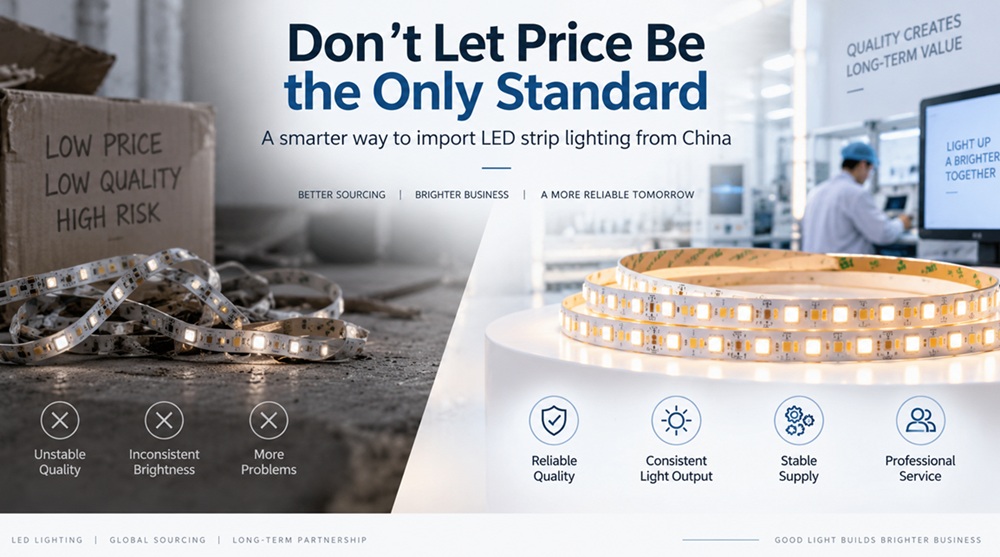
However, price alone should never be the only standard when choosing an LED strip supplier.
Many buyers, especially those new to the LED lighting industry, focus primarily on obtaining the lowest possible price. At first glance, this approach may appear to reduce procurement costs. But in reality, choosing LED strip lights based solely on price often leads to hidden risks such as product failures, inconsistent lighting performance, delayed deliveries, and costly project problems.
In the long term, poor purchasing decisions can actually increase costs instead of saving money.
This article explains why price should not be the only factor when importing LED strip lighting from China and highlights the key aspects buyers should evaluate when selecting a reliable supplier.
Table of Contents
The Real Cost of LED Strip Lighting Goes Beyond the Purchase Price
When buyers compare quotations from multiple suppliers, it is natural to focus on the unit price per meter. However, the purchase price is only one part of the total cost involved in importing LED strip lighting.
A complete cost evaluation should consider several additional factors.
Product Lifespan
High-quality LED strips typically last much longer than cheaper alternatives. Products built with better LED chips, thicker PCBs, and reliable components maintain stable performance over time.
If low-cost strips fail prematurely, the cost of replacements, maintenance, and labor can easily exceed the initial savings.
Installation Costs
Many LED strip installations involve professional labor. Replacing defective lighting after installation can require dismantling structures, reopening ceilings, or reinstalling fixtures. These additional labor costs can quickly become significant.
Project Delays
If LED strip lights fail during testing or installation phases, project timelines may be affected. Delays in commercial lighting projects can lead to financial penalties or reputational damage.
When evaluating suppliers, buyers should always consider the total lifecycle cost, not just the initial purchase price.
Lower Prices Often Mean Lower Component Quality
LED strip lights may look similar externally, but internal components can vary greatly between manufacturers. The quality of materials used during production has a major impact on product reliability and lifespan.
Several key components determine LED strip quality.
LED Chips
The LED chip is the light-producing component of the strip. High-quality chips provide stable brightness, consistent color temperature, and longer operating lifespans.
Lower-cost strips sometimes use lower-grade LED chips with reduced luminous efficiency or inconsistent color performance.
Bonding Wire
Inside LED packages, bonding wires connect the LED chip to the electrical contacts. Premium LED strips often use gold bonding wire, which offers excellent conductivity and durability.
Cheaper alternatives may use alloy wire, which can reduce production costs but may also affect long-term reliability.
PCB Copper Thickness
The printed circuit board plays an essential role in heat dissipation. Thicker copper layers improve thermal management and electrical stability.
Strips manufactured with thinner copper layers may overheat during operation, reducing LED lifespan.
Resistors and Electronic Components
Reliable resistors and electronic components help maintain stable current flow across the LED strip. Low-quality components may cause brightness inconsistency or early failures.
These differences may not be visible to buyers immediately, but they significantly affect long-term product performance.
Poor Heat Dissipation Leads to Shorter LED Lifespan
Heat management is one of the most important factors affecting LED strip reliability.
LED chips generate heat during operation. If this heat cannot dissipate efficiently, the temperature within the strip increases. Excessive heat gradually damages LED chips, reducing brightness and shortening lifespan.
High-quality LED strips often include several design features that improve heat dissipation:
- thicker PCB copper layers
- optimized circuit layouts
- high-quality materials
- compatibility with aluminum profiles
Cheaper products may reduce costs by using thinner PCBs or lower-grade materials, resulting in poor thermal performance.
Over time, these design differences can significantly affect lighting stability.
Color Consistency Is Critical for Professional Lighting Projects
In many lighting applications, color consistency is extremely important. Architectural lighting, retail displays, hotels, and commercial interiors all require uniform lighting appearance.
LED manufacturers usually control color consistency through LED binning and SDCM management. These processes ensure that LED chips used in production have similar color characteristics.
Low-cost LED strips sometimes skip strict binning control in order to reduce manufacturing costs.
This can lead to visible color differences along the strip or between different production batches. Such inconsistencies can create uneven lighting effects that negatively affect the overall design.
For professional lighting installations, color uniformity should always be considered when selecting products.
Reliable Manufacturing Requires Strong Quality Control
Professional LED strip manufacturers implement strict quality control systems throughout the production process.
Typical quality procedures include:
Incoming Material Inspection
Components such as LED chips, resistors, and PCBs are inspected before production begins.
SMT Production Monitoring
Automated SMT machines place components precisely on circuit boards.
Aging Tests
Finished LED strips are often operated continuously for several hours or longer. Aging tests help identify early failures before products are shipped.
Final Inspection
Products undergo visual inspection and electrical testing before packaging.
Factories that maintain rigorous testing procedures significantly reduce the risk of defective products reaching customers.
Suppliers that focus only on low prices may skip some of these processes to reduce costs.
Reliable Suppliers Provide Technical Support
LED strip lighting is used in a wide variety of applications, including:
- retail lighting
- architectural outlines
- signage illumination
- interior decorative lighting
- hospitality projects
Different projects require different LED strip specifications.
Reliable suppliers usually provide technical guidance to help buyers select the appropriate products. This may include advice on:
- LED density
- voltage selection
- power supply calculation
- installation methods
- waterproof protection
Suppliers focused only on price may provide limited technical support, leaving buyers responsible for solving installation issues themselves.
Customization Capabilities Add Long-Term Value
Many buyers require customized LED strip solutions tailored to specific markets or projects.
Customization options may include:
- custom PCB widths
- specific color temperatures
- unique LED densities
- special waterproof levels
- private label packaging
Suppliers with strong OEM and ODM capabilities can help buyers develop differentiated products that stand out in competitive markets.
While customized solutions may cost slightly more than standard products, they often provide better long-term value and brand differentiation.
Communication and Reliability Matter in International Trade
When importing products from overseas suppliers, clear communication and reliability are essential.
Reliable manufacturers typically offer:
- quick responses to inquiries
- clear product specifications
- transparent pricing structures
- stable delivery schedules
Suppliers that focus only on offering the lowest prices may not prioritize communication or customer service.
Strong communication reduces misunderstandings and helps ensure that products meet buyer expectations.
Long-Term Partnerships Create Greater Business Stability
Successful import businesses often rely on long-term partnerships with trusted suppliers.
Working with a reliable manufacturer provides several advantages:
- consistent product quality
- stable pricing structures
- faster problem resolution
- better support for customization
Rather than constantly searching for the lowest price, many experienced buyers prioritize building stable supply relationships that support long-term growth.
Smart Buyers Evaluate Value Instead of Just Price
Professional buyers typically evaluate suppliers using multiple criteria, including:
- product quality
- manufacturing experience
- certifications
- testing procedures
- customization capabilities
- communication efficiency
Price remains an important factor, but it should always be considered alongside these other elements.
By focusing on overall value rather than simply choosing the lowest quote, buyers can build more reliable supply chains and achieve better long-term business results.
Conclusion
Importing LED strip lighting from China offers many advantages, including competitive pricing, strong manufacturing capacity, and advanced customization capabilities.
However, selecting products based solely on the lowest price can create hidden risks such as inconsistent quality, shorter lifespans, and project complications.
Experienced buyers understand that reliable lighting products depend on many factors beyond cost, including component quality, heat management, manufacturing processes, and supplier expertise.
By evaluating suppliers carefully and focusing on long-term value rather than short-term savings, buyers can build stronger supply partnerships and ensure successful lighting projects.
In the rapidly evolving LED lighting industry, informed purchasing decisions remain the key to sustainable business growth.
Other articles:
The Ultimate Guide to LED Neon Flex Strip
ESD Protection in LED Neon Strips: Why Anti-Static Manufacturing Matters
As a bespoke lighting solution provider, Yiholight specializes in high-quality LED strips and neon flex lights. Our products are engineered for durability, brightness, and ease of installation—trusted by B2B customers across the globe.
Contact us today to explore the best LED lighting for your business!
© [Yiholight] and [www.yiholight.com]. Unauthorized use or duplication of this material is strictly prohibited without express written permission from the site’s author or owner. Excerpts and links may be used, provided full, clear credit is given to [Yiholight] and [www.yiholight.com], with appropriate, specific direction to the original content.