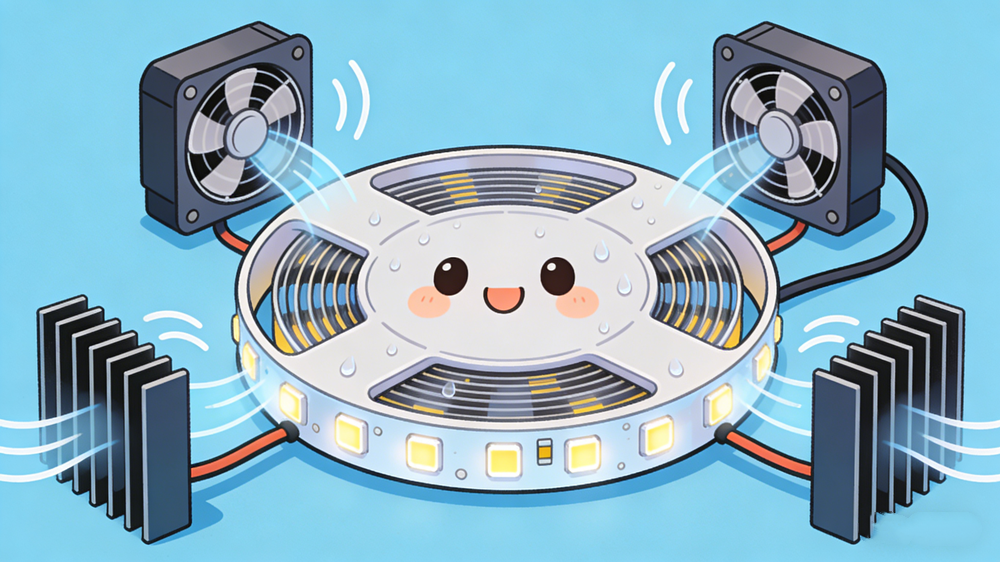
LED strip lighting is often promoted as energy-efficient, long-lasting, and maintenance-free. While these advantages are real, they are only achievable when one critical factor is properly controlled:
Heat dissipation.
In practice, poor heat management is the number one cause of LED strip failure, responsible for rapid brightness loss, color shift, shortened lifespan, and customer complaints. Unfortunately, heat dissipation is also one of the least visible — and least discussed — aspects of LED strip design.
This article explains why heat dissipation matters in LED strip lighting, how it affects performance and reliability, and what buyers should look for when evaluating product quality.
Table of Contents
LEDs Are Efficient — But Heat Is Still the Enemy
LEDs convert electricity into light far more efficiently than traditional light sources, but they are not heat-free devices.
Where Heat Comes From
- Only part of the electrical energy becomes visible light
- The remaining energy is converted into heat at the LED junction
- Higher power density = higher heat concentration
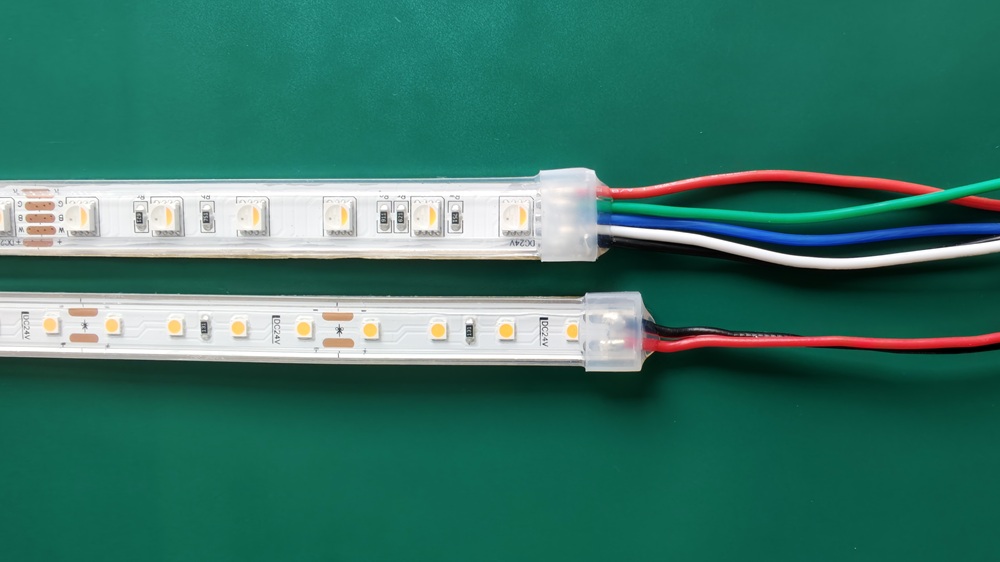
In LED strips, LEDs are mounted closely together on a flexible PCB. This compact design limits natural heat dissipation, making thermal management far more critical than in traditional fixtures.
Key reality:
LEDs rarely fail suddenly due to heat. Instead, they slowly degrade, which makes heat damage difficult to detect until performance has already declined.
Heat Directly Determines LED Lifespan and Brightness Stability
The lifespan of an LED is not determined by whether it turns on — it is determined by how long it can maintain usable brightness.
Effects of Excessive Heat on LED Strips
- Accelerated lumen depreciation (faster L70 failure)
- Phosphor aging, causing color shift
- Reduced LED efficiency
- Increased failure rate over time
An LED strip that runs too hot may still work after a year — but it will be:
- Noticeably dimmer
- Color-inconsistent
- Less reliable
This is why two LED strips with identical specifications can perform very differently over time.
💡 Temperature control is lifespan control.
PCB Design: The Foundation of Heat Dissipation
In LED strip lighting, the PCB (printed circuit board) is the primary path for heat to escape from the LED chip.
High-Quality PCB Design Includes:
- Thicker copper layers
- Wide copper traces
- High thermal conductivity materials
- Stable flexible substrate
These elements allow heat to spread evenly along the strip and transfer efficiently to the mounting surface or aluminum profile.
Low-Cost PCB Design Often Means:
- Thin copper layers
- Narrow traces
- Poor thermal conductivity
- Localized heat buildup around LED pads
From the outside, both PCBs may look identical. Internally, the difference can be 20–30°C in operating temperature, which dramatically affects lifespan.
Power Density & LED Driving Current: Brightness vs Longevity
Heat dissipation is not only about materials — it is also about electrical design philosophy.
Overdriven LED Strips
Some low-cost LED strips achieve higher brightness by:
- Driving LEDs close to their maximum rated current
- Reducing safety margins
- Ignoring long-term thermal stress
These products look impressive at first, but:
- Generate excessive heat
- Age rapidly
- Fail prematurely
Thermally Balanced LED Strips
Professional LED strip designs:
- Operate LEDs below maximum current
- Balance brightness and thermal limits
- Maintain stable performance over time
This conservative approach may slightly reduce initial brightness — but significantly extends product life.
Installation Environment: Where Heat Problems Often Begin
Even a well-designed LED strip can suffer from poor heat dissipation if installed incorrectly.
Common High-Risk Installation Scenarios
- No aluminum profile
- Enclosed or sealed channels
- Insufficient airflow
- High ambient temperature environments
Flexible LED strips rely heavily on their installation surface to help dissipate heat. Without proper thermal support, heat becomes trapped.
Best Practices for Thermal Performance
- Use aluminum profiles as heat sinks
- Avoid installing strips directly onto insulating materials
- Allow airflow where possible
- Consider ambient temperature during system design
In real projects, installation quality often determines actual lifespan.
Heat Dissipation and Color Stability
Heat does not only affect brightness — it also affects color quality.
Thermal Impact on Color
- Phosphor materials degrade faster at high temperatures
- Color temperature may shift warmer or greener
- Color consistency between strips can deteriorate over time
This is especially critical for:
- Architectural lighting
- Retail displays
- Hospitality projects
- High-CRI applications
Poor heat dissipation can undermine even the best CRI and SDCM specifications.
Why Heat Dissipation Explains Price Differences
Heat management is one of the largest hidden cost factors in LED strip manufacturing.
Heat-Related Cost Drivers Include:
- Thicker copper PCBs
- Higher-grade LED chips
- Conservative current design
- Thermal simulation and testing
- Quality control during production
Low-price LED strips often reduce cost by:
- Using thin PCBs
- Overdriving LEDs
- Skipping thermal validation
- Accepting shorter lifespan
The result is a product that looks competitive on paper — but fails faster in real use.
💡 You are not paying only for light output — you are paying for thermal reliability.
Conclusion: Heat Dissipation Is a Core Quality Indicator
Heat dissipation is not an optional feature — it is a fundamental design requirement for LED strip lighting.
- It determines lifespan
- It controls brightness stability
- It protects color quality
- It reduces long-term maintenance costs
In LED strip lighting, the most important quality factors are often invisible. Understanding heat dissipation allows buyers to make smarter decisions and avoid hidden long-term costs.
Other articles:
How PCB Design Affects LED Strip Lifespan
How LED Strip Aging Tests Ensure Long-Term Reliability
How to Identify a High-Quality LED Strip
Common LED Strip Problems and How to Solve Them
As a bespoke lighting solution provider, Yiholight specializes in high-quality LED strips and neon flex lights. Our products are engineered for durability, brightness, and ease of installation—trusted by B2B customers across the globe.
Contact us today to explore the best LED lighting for your business!
© [Yiholight] and [www.yiholight.com]. Unauthorized use or duplication of this material is strictly prohibited without express written permission from the site’s author or owner. Excerpts and links may be used, provided full, clear credit is given to [Yiholight] and [www.yiholight.com], with appropriate, specific direction to the original content.