Choosing LED strip lighting can feel overwhelming. With so many options — different LED chips, voltages, brightness levels, colors, and structures — many buyers end up selecting the wrong product for their application. The result is often uneven brightness, poor light quality, overheating, or unnecessary cost.
This guide breaks the decision process into clear, logical steps, helping you choose the right LED strip light based on your project requirements — whether for residential, commercial, or architectural lighting.
Table of Contents
Step 1: Define the Purpose of the Lighting
The first and most important question is:
What is the LED strip being used for?
Different purposes require different performance levels.
Decorative Lighting
Used to enhance atmosphere rather than provide primary illumination.
Typical examples:
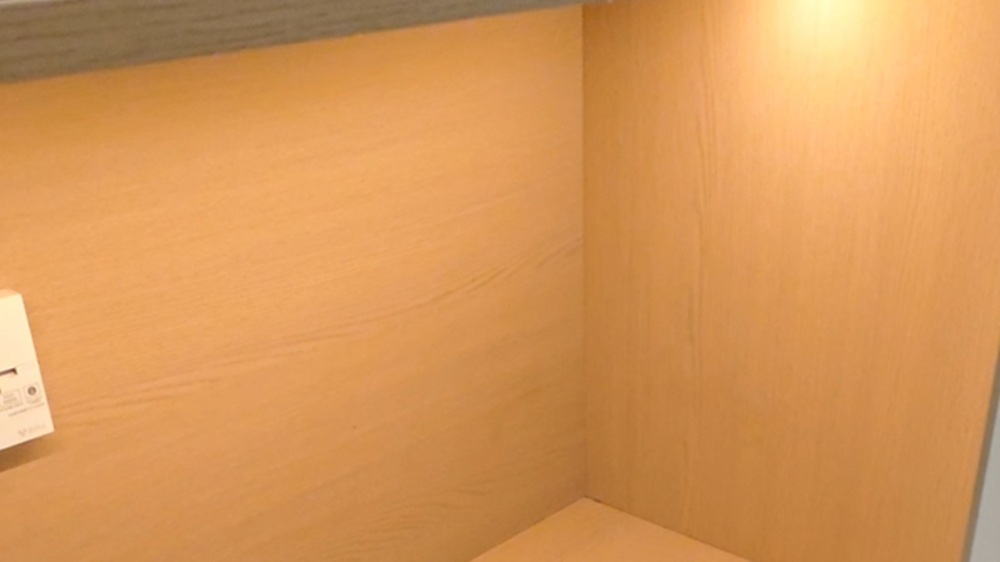
- Cove lighting
- Backlighting
- Shelves and display accents
Recommended features:
- Lower to medium brightness
- High LED density for smooth light
- COB or high-density SMD strips
- Single color, RGB, or tunable white
Task Lighting
Used for functional purposes where visibility matters.
Examples:
- Under-cabinet kitchen lighting
- Workstations
- Display counters
Recommended features:
- Medium to high brightness
- High CRI (≥90)
- Natural white or pure white (4000K–5000K)
- Even light distribution
Primary / General Lighting
LED strips act as a main light source.
Examples:
- Ceiling coves
- Linear architectural lighting
- Commercial interiors
Recommended features:
- High brightness (≥1200 lm/m)
- High efficacy (≥130lm/W)
- 24V or constant-current designs
- Aluminum profiles for heat dissipation
Step 2: Choose the Right LED Chip Type
LED chip selection directly affects brightness, efficiency, and visual appearance.
Popular Choices
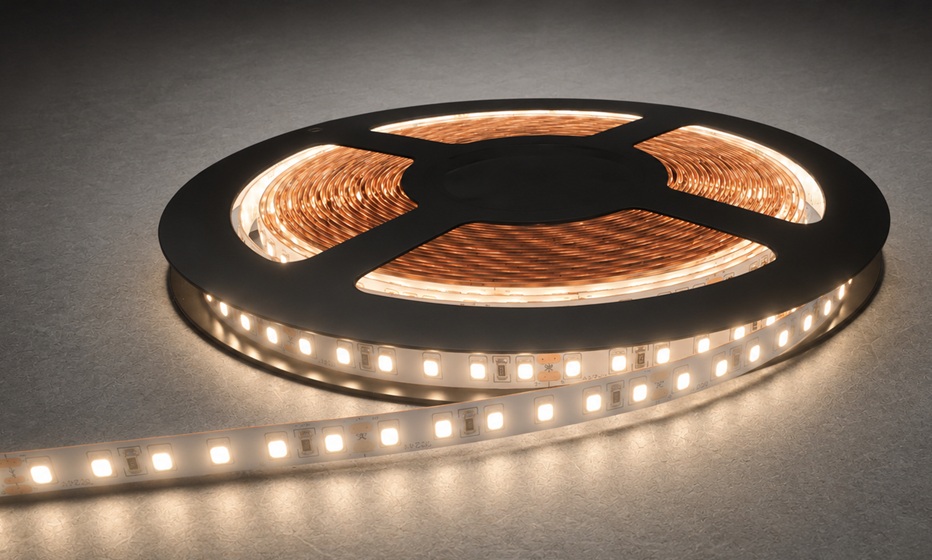
- 2835 / 3030: Balanced brightness and efficiency
- 5050: Best for RGB and RGBW color mixing
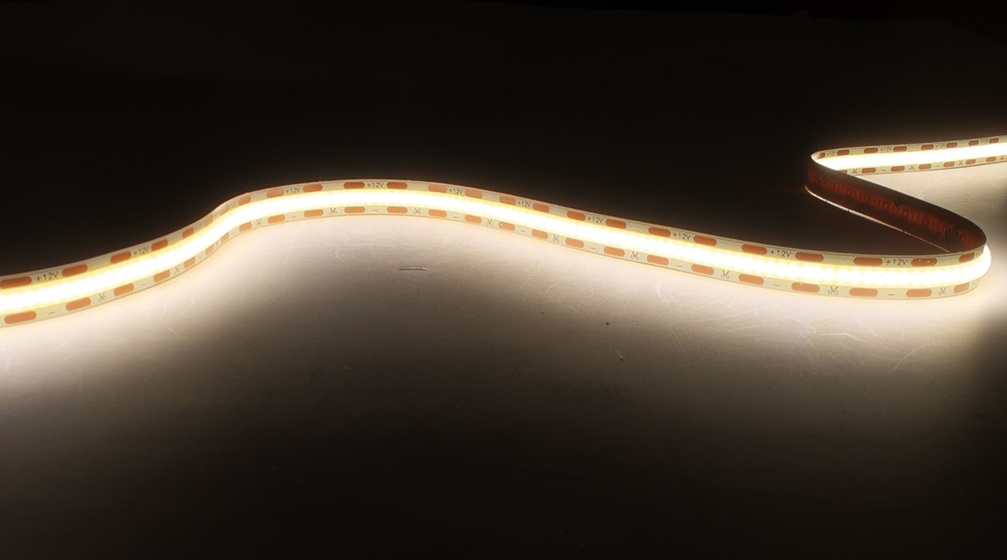
- COB: Dot-free, continuous lighting
- Mini LED: Compact, precision applications
Tip:
If the LED strip will be visible, prioritize COB or high-density SMD to avoid spotting.
Step 3: Select the Correct Brightness Level
Brightness is measured in lumens per meter (lm/m) — not watts.
General Guidelines
- Ambient lighting: 300–600 lm/m
- Task lighting: 800–1200 lm/m
- Primary lighting: 1200–2000+ lm/m
More brightness is not always better. Excessive brightness can cause glare, discomfort, and unnecessary power consumption.
Step 4: Decide on Color Type & Control Method
Color choice determines both functionality and user experience.
Single Color (White or Monochrome)
Best for:
- Functional lighting
- Clean, simple designs
CCT Tunable White
Allows adjustment from warm to cool white.
Best for:
- Homes
- Offices
- Hospitality environments
RGB / RGBW / RGB+TW
Adds color-changing capability.
Best for:
- Decorative lighting
- Retail and entertainment
- Experience-driven spaces
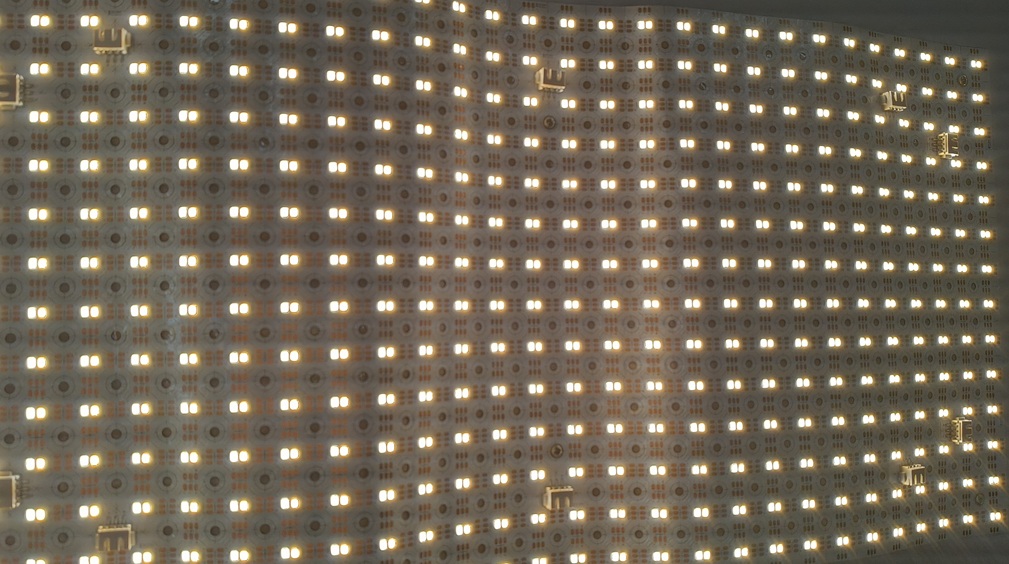
Digital / Addressable LED Strips
Each LED or segment is individually controlled.
Best for:
- Architectural facades
- Dynamic installations
- Stage and event lighting
Step 5: Choose the Right Voltage
Voltage affects safety, brightness consistency, and installation length.
Voltage Comparison
- 5V: Short runs, digital LED strips
- 12V: Residential use, short to medium runs
- 24V: Commercial & architectural projects
- Constant Current: Ultra-long uniform lighting
Rule of thumb:
For runs longer than 5 meters, 24V or constant current is strongly recommended.
Step 6: Consider LED Density & Light Uniformity
LED density affects how smooth the light appears.
Density Options
- Low density (30–60 LEDs/m): visible dots
- Medium density (120 LEDs/m): balanced
- High density (180–240 LEDs/m): smooth
- COB: dot-free continuous light
- Higher density is especially important when the strip is visible
- Installed close to surfaces
- Used with shallow profiles
Step 7: Evaluate Installation Environment
Where the LED strip will be installed is critical.
Indoor (Dry Areas)
- IP20 is sufficient
- Better heat dissipation
- More flexible options
Moist or Outdoor Areas
IP65, IP67, or IP68 required
- Silicone or PU protection
- Ensure proper waterproof power supply
High-Temperature Environments
- Sauna or steam room LED strips
- Heat-resistant materials
- Specialized design required
Step 8: Select the Proper Mounting & Heat Management
Heat is the biggest enemy of LED lifespan.
Best Practices
- Use aluminum profiles for medium to high power strips
- Avoid direct installation on heat-insulating surfaces
- Ensure airflow where possible
- Good heat management extends LED strip lifespan dramatically.
Step 9: Power Supply Selection (Basic Rule)
Always size power supplies correctly.
How to Calculate
- Total power = strip wattage × total length
- Add 20–30% safety margin
Example:
- 10 W/m × 8 m = 80 W
- Power supply ≥ 100 W recommended
- Use high-quality drivers to avoid flickering and early failure.
Step 10: Consider Certifications & Quality Standards
Especially important for Europe, the US, and Middle East markets.
Look for:
- CE & RoHS
- UL (for North America)
- Stable binning & aging tests
Certified products ensure safety, reliability, and easier project approval.
Common Mistakes to Avoid
- Choosing wattage instead of brightness
- Ignoring voltage drop
- Using indoor strips outdoors
- Skipping aluminum profiles
- Undersized power supplies
- Avoiding these mistakes saves time, cost, and frustration.
Quick LED Strip Selection Checklist
Before purchasing, confirm:
- Purpose of lighting
- Required brightness
- Color & control type
- Voltage & run length
- IP rating
- Heat dissipation method
- Certifications
Conclusion
Choosing the right LED strip light is about matching the product to the project, not simply picking the brightest or cheapest option. By understanding how purpose, brightness, color, voltage, and installation conditions interact, you can create lighting solutions that are efficient, reliable, and visually outstanding.
A thoughtful selection process leads to better lighting performance — and better long-term value.
Other articles:
The Ultimate Guide to LED Strip Lights
LED Strip Specs Explained: What Really Matters
How to Identify a High-Quality LED Strip
As a bespoke lighting solution provider, Yiholight specializes in high-quality LED strips and neon flex. Our products are engineered for durability, brightness, and ease of installation—trusted by B2B customers across the globe.
Contact us today to explore the best LED lighting for your business!
© [Yiholight] and [www.yiholight.com]. Unauthorized use or duplication of this material is strictly prohibited without express written permission from the site’s author or owner. Excerpts and links may be used, provided full, clear credit is given to [Yiholight] and [www.yiholight.com], with appropriate, specific direction to the original content.