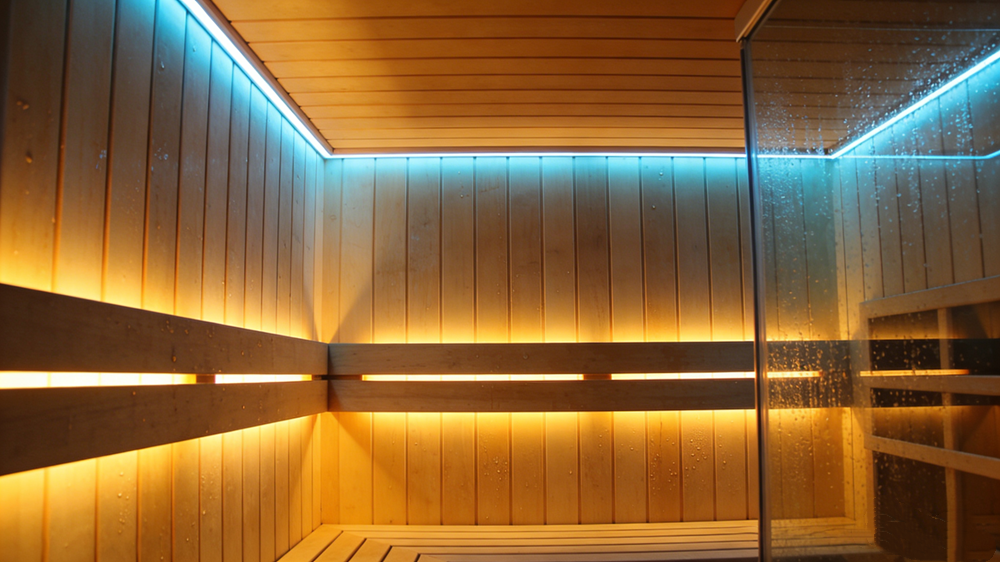
Lighting a sauna or steam room is not the same as lighting a living room, office, or retail space. The high temperature, humidity, and moisture levels present unique challenges for LED strip lighting. Choosing the wrong product can lead to early failures, safety hazards, and poor user experience.
This article explains the special requirements for sauna and steam room LED strips, the differences between typical indoor strips and spa-grade strips, and best practices for long-term performance.
Table of Contents
Why Sauna & Steam Rooms Are Special Environments
Saunas and steam rooms expose LED strips to extreme conditions that typical indoor lighting cannot withstand:
High temperature:
- Dry saunas: 70–100°C (158–212°F)
- Steam rooms: 45–55°C (113–131°F), plus humidity
High humidity and condensation:
- Steam rooms often reach 100% relative humidity
- Moisture penetrates ordinary LED strips, causing corrosion and electrical failure
Chemical exposure:
- Wood treatment oils, cleaning products, and steam additives can react with plastic or silicone coatings
In short: ordinary LED strips fail quickly in these conditions unless they are specifically designed for sauna and steam room use.
Key Requirements for Sauna & Steam Room LED Strips
When selecting LED strips for spa environments, you must consider:
a) High-Temperature Resistance
- LED chips and PCB materials must tolerate up to 100°C (for saunas) without discoloration or degradation
- Silicone or polyurethane coatings must remain stable at high temperatures
- Adhesive layers must maintain bond to the mounting surface
b) Water and Steam Protection
- IP67 or IP68-rated coatings protect against condensation and occasional splashes
- Fully encapsulated strips prevent corrosion of copper traces and LED solder joints
c) Chemical Resistance
- Coatings and encapsulants should resist oils, cleaning solutions, and spa chemicals
- Silicone encapsulation is preferred for its flexibility and chemical stability
d) Flexible Mounting Options
- Strips must fit behind benches, along walls, or under lighting coves
- Flexible PCBs with high-temperature silicone coatings ensure safety and durability during installation
e) Thermal Management
- Even in high heat, strips must avoid overheating
- Aluminum profiles or heat-dissipating channels are highly recommended
Proper design ensures stable brightness and long lifespan.
Differences Between Sauna and Steam Room LED Strips
Although both are “hot and humid,” there are subtle differences:
|
Feature |
Sauna LED Strips |
Steam Room LED Strips |
|
Temperature |
70–100°C |
45–55°C |
|
Humidity |
Low (~10–20%) |
High (~100%) |
|
Moisture exposure |
Occasional condensation |
Constant steam |
|
Required coating |
High-temp silicone |
IP68 waterproof silicone |
|
Installation |
Behind wood panels |
Protected in channels or diffusion tubes |
💡 Tip: A sauna-rated LED strip may survive in a steam room briefly, but long-term reliability requires the correct rating.
Color & Mood Considerations
Saunas and steam rooms are about wellness, relaxation, and ambiance. LED strip lighting should support:
- Warm white tones (2700–3000K) for cozy, relaxing atmosphere
- RGB or tunable white for mood lighting in high-end spas
- Flicker-free operation to avoid eye fatigue during long exposure
Specialized LED strips can combine high-temperature tolerance with color consistency.
Installation Best Practices
Proper installation is essential for longevity and safety:
- Mounting surface: Aluminum channels behind wooden panels improve heat management
- Encapsulation: Use strips fully coated in high-temperature silicone or PU
- Power supply placement: Keep low-voltage drivers outside high-heat areas
- End caps & connectors: Seal all ends to prevent moisture ingress
- System testing: Conduct burn-in at high temperature before final installation
💡 Remember: even premium LED strips can fail prematurely if exposed directly to sauna heat or steam without proper installation.
Common Mistakes to Avoid
- Using standard indoor LED strips behind sauna panels
- Ignoring IP rating or high-temperature requirements
- Placing power supply or connectors inside hot or humid zones
- Cutting strips without resealing end caps
- Skipping pre-installation testing at high temperature
Avoiding these mistakes ensures safe, long-lasting, and visually pleasing lighting.
Conclusion: Spa Lighting Requires Specialized LED Strips
Sauna and steam room lighting is not “one-size-fits-all”. High temperature, high humidity, and chemical exposure demand:
- IP67/IP68 waterproof strips
- High-temperature silicone or PU coatings
- Flicker-free, color-stable LEDs
- Proper mounting and power supply placement
Using spa-grade LED strips ensures long-term reliability, safety, and customer satisfaction, making the difference between a premium spa experience and costly failures.
Other articles:
LED lighting for office spaces: benefits, applications and design tips
From flat to fabulous: transform walls with LED lighting
Why S-shape LED strips are a game-changer for curved lighting
As a bespoke lighting solution provider, Yiholight specializes in high-quality LED strips and neon flex lights. Our products are engineered for durability, brightness, and ease of installation—trusted by B2B customers across the globe.
Contact us today to explore the best LED lighting for your business!
© [Yiholight] and [www.yiholight.com]. Unauthorized use or duplication of this material is strictly prohibited without express written permission from the site’s author or owner. Excerpts and links may be used, provided full, clear credit is given to [Yiholight] and [www.yiholight.com], with appropriate, specific direction to the original content.