LED strip lights are widely used for architectural, commercial, outdoor, and decorative lighting, but exposure to water and moisture can shorten their lifespan or cause performance issues. Whether installing LED strips in gardens, outdoor signage, bathrooms, kitchens, or humid environments, proper waterproofing is essential for durability and reliability.
In this guide, we will explore the best ways to protect LED strips from water and moisture, ensuring long-lasting and high-performance lighting for your projects.
Table of Contents
Why Protect LED Strips from Water and Moisture?
💧 Prevents Short Circuits – Moisture can cause electrical failures and damage LED strips.
💧Extends Lifespan – Waterproof LED strips last longer in outdoor and humid environments.
💧Maintains Brightness – Water exposure can lead to LED dimming or discoloration over time.
💧Ensures Safety – Proper waterproofing prevents electric shocks and fire hazards.
Choosing the Right Waterproof LED Strip (IP Rating Guide)
To protect LED strips from water, choose the right waterproof level, measured by the IP (Ingress Protection) rating:
- IP20– No waterproofing, for indoor dry environments like living rooms and offices.
- IP65– Water-resistant, for kitchens, bathrooms, and under cabinets (protected from splashes).
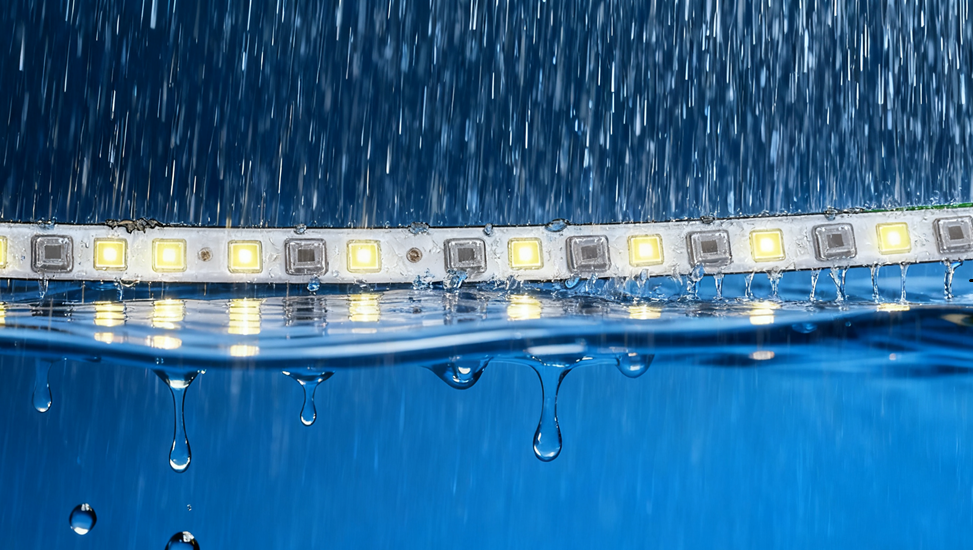
- IP67– Fully waterproof, suitable for outdoor installations where LED strips may be exposed to rain.
- IP68– Completely submersible, ideal for pools, fountains, marine lighting, and heavy outdoor use.
For outdoor commercial and architectural lighting, we recommend IP67 or IP68 LED strips to ensure long-term performance.
How to Waterproof LED Strips for Maximum Protection
1️⃣ Use Waterproof LED Strips
✔ Purchase LED strips with an IP65, IP67, or IP68 rating for outdoor and humid environments.
✔ These strips arecoated with silicone or epoxy, preventing water damage.
2️⃣ Apply a Silicone Sealant
✔ If using non-waterproof LED strips, apply a clear silicone sealant along the strip.
✔ This protectsLED chips, soldering points, and circuits from moisture.
3️⃣ Use Waterproof LED Aluminum Channels
✔ Install LED strips in aluminum channels with waterproof covers for extra protection.
✔ Helps withheat dissipation and prevents dust, moisture, and physical damage.
4️⃣ Choose the Right Waterproof Connectors
✔ Use IP-rated waterproof connectors for a secure, water-resistant connection.
✔ Avoidexposed wiring, which can cause shorts and failure in wet environments.
5️⃣ Protect Power Supplies and Controllers
✔ Use IP67/IP68-rated power supplies for outdoor projects.
✔ Keep LEDdrivers and controllers in waterproof enclosures to prevent damage.
6️⃣ Properly Seal Cut LED Strips
✔ After cutting LED strips, seal the exposed end with silicone glue and end caps.
✔ This preventswater from entering the circuit and damaging the LEDs.
Where to Use Waterproof LED Strips?
✔ Outdoor Commercial Lighting – Building facades, parking lots, landscape lighting.
✔Architectural Projects – Bridges, pathways, public installations.
✔Retail & Hospitality – Hotels, restaurants, outdoor seating areas.
✔Signage & Advertising – Outdoor billboards, shopfront displays.
✔Marine & Pool Lighting – Underwater, docks, fountains.
✔Automotive & Vehicle Lighting – Exterior lighting for trucks, boats, motorcycles.
At Yiholight, we specialize in high-quality LED strips, flex neon strip, LED downlight, LED track light. Our products are engineered for durability, brightness, and ease of installation—trusted by B2B customers across the globe.
Contact us today to explore the best LED lighting for your business!