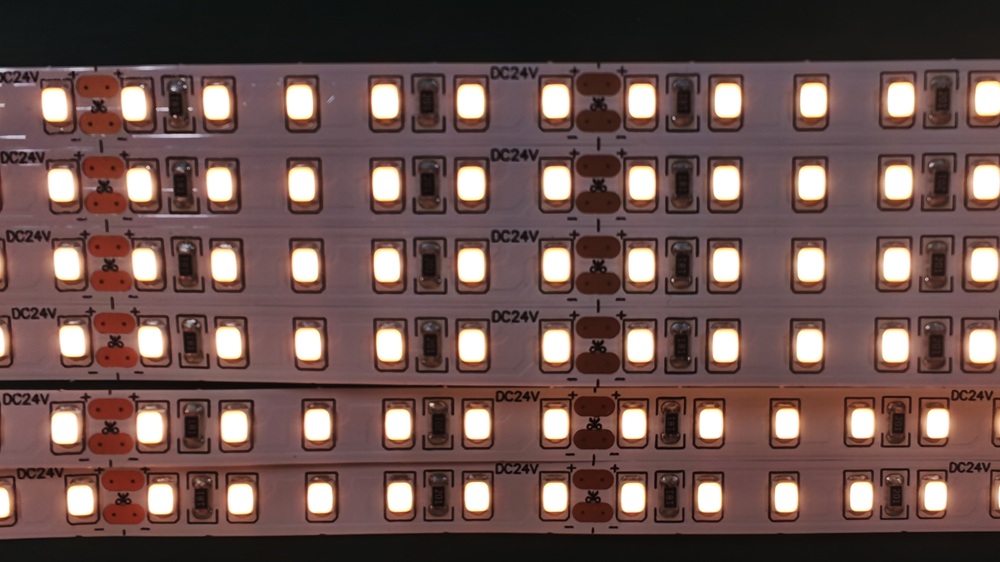
When buying LED strip lighting, many buyers focus on brightness, wattage, or price.
However, for professional lighting projects, color quality is often the difference between a successful installation and a costly mistake.
Terms like CRI, SDCM, and color binning frequently appear on datasheets — but are often misunderstood or ignored.
This article explains what these terms really mean, why they matter, and how they directly affect the visual quality, consistency, and value of LED strip lighting.
Table of Contents
Why Color Quality Is Critical in LED Strip Lighting
LED strips are commonly installed in:
- Architectural lighting
- Retail displays
- Hotels and residential interiors
- Museums, galleries, and offices
In these environments:
- Inconsistent color looks unprofessional
- Poor color rendering distorts materials
- Color mismatch damages design intent
Color quality is not a luxury feature — it is a functional requirement for most projects.
What Is CRI (Color Rendering Index)?
Definition
CRI (Color Rendering Index) measures how accurately a light source shows colors compared to natural sunlight.
The scale ranges from 0 to 100:
- CRI 80 – acceptable for general lighting
- CRI 90+ – professional and architectural lighting
- CRI 95+ – premium applications
Why CRI Matters
Low CRI lighting can make:
- Wood look dull
- Food appear unappetizing
- Skin tones unnatural
- Product colors inaccurate
Common Misunderstanding
A higher CRI does not mean higher brightness.
It means better color fidelity.
📌 For most commercial and residential projects, CRI ≥90 is recommended.
CRI vs R9: The Hidden Detail Many Miss
Standard CRI is an average of multiple color samples — but R9 (strong red) is often excluded.
Why R9 Is Important
- Red tones affect skin, food, wood, and textiles
- Many “CRI 90” LEDs have poor R9 values
Professional LED Strips Should Offer:
- CRI ≥90
- R9 ≥50 (or higher for premium projects)
Without R9 data, CRI alone does not tell the full story.
What Is SDCM (Color Consistency)?
SDCM (Standard Deviation of Color Matching), also known as MacAdam ellipse, measures how consistent the color is between LEDs.
Understanding SDCM Values
- SDCM ≤3 – Very high consistency (recommended)
- SDCM 4–5 – Visible differences possible
- SDCM ≥6 – Color variation clearly noticeable
The lower the SDCM, the more uniform the light appears.
Why SDCM Is Critical for LED Strips
LED strips are often:
- Installed in long continuous lines
- Used in parallel runs
- Installed across multiple rooms or areas
If SDCM control is poor:
- Adjacent strips look different
- Color variation becomes obvious
- Replacements don’t match existing installations
💡 SDCM issues usually appear only after installation — when it’s too late.
What Is Color Binning?
Color binning is the process of sorting LEDs by color characteristics during production.
Each LED chip is categorized based on:
- Color temperature (CCT)
- Chromaticity coordinates
- Brightness level
Only LEDs from the same bin should be used together in one LED strip batch.
How Poor Binning Causes Visible Problems
Without strict binning control:
- 3000K may appear yellow in one strip
- Another “3000K” may appear pink or green
- Different production batches won’t match
This is one of the main reasons two LED strips with identical specs look different.
Relationship Between CRI, SDCM & Binning
These three elements work together:
|
Parameter |
Controls |
Impact |
|
CRI |
Color accuracy |
How colors look |
|
SDCM |
Color consistency |
Uniform appearance |
|
Binning |
Production uniformity |
Batch-to-batch stability |
A high CRI LED with poor SDCM is still problematic.
Good binning without CRI control is not enough.
Professional LED strips manage all three.
How Low-Cost LED Strips Cut Corners
To reduce cost, some manufacturers:
- Mix LED bins
- Use wide SDCM ranges
- Skip color testing
- Rely on theoretical CRI values
These shortcuts reduce price — but increase risk.
Once installed, color inconsistency becomes:
- Highly visible
- Expensive to fix
- Damaging to brand reputation
How Professional Manufacturers Control Color Quality
High-quality LED strip suppliers invest in:
- Tight bin selection
- Batch tracking
- Color consistency testing
- Controlled LED sourcing
This ensures:
- Stable color across shipments
- Reliable replacements
- Professional lighting results
Color control is not accidental — it is engineered.
How Buyers Should Specify Color Quality
When sourcing LED strips, buyers should ask for:
- CRI value (and R9 if possible)
- SDCM specification (≤3 recommended)
- Binning policy
- Batch consistency assurance
Clear specifications protect both performance and long-term cost.
Real-World Applications That Demand High Color Quality
High CRI + low SDCM are especially critical for:
- Retail stores
- Hotels and hospitality
- Residential interiors
- Art galleries
- Showrooms
In these applications, lighting is part of the visual experience, not just illumination.
Conclusion
CRI, SDCM, and color binning may sound technical — but their impact is immediately visible.
- CRI determines how true colors appear
- SDCM determines whether light looks uniform
- Color binning determines consistency across production
For professional LED strip lighting, color quality is not optional — it is essential.
Other articles:
Full Spectrum LED Strip: Natural Light, High Color Fidelity and Better Visual Quality
LED Strip Specs Explained: What Really Matters
How to Choose LED Strip Lights for Commercial Projects
As a bespoke lighting solution provider, Yiholight specializes in high-quality LED strips and neon flex lights. Our products are engineered for durability, brightness, and ease of installation—trusted by B2B customers across the globe.
Contact us today to explore the best LED lighting for your business!
© [Yiholight] and [www.yiholight.com]. Unauthorized use or duplication of this material is strictly prohibited without express written permission from the site’s author or owner. Excerpts and links may be used, provided full, clear credit is given to [Yiholight] and [www.yiholight.com], with appropriate, specific direction to the original content.