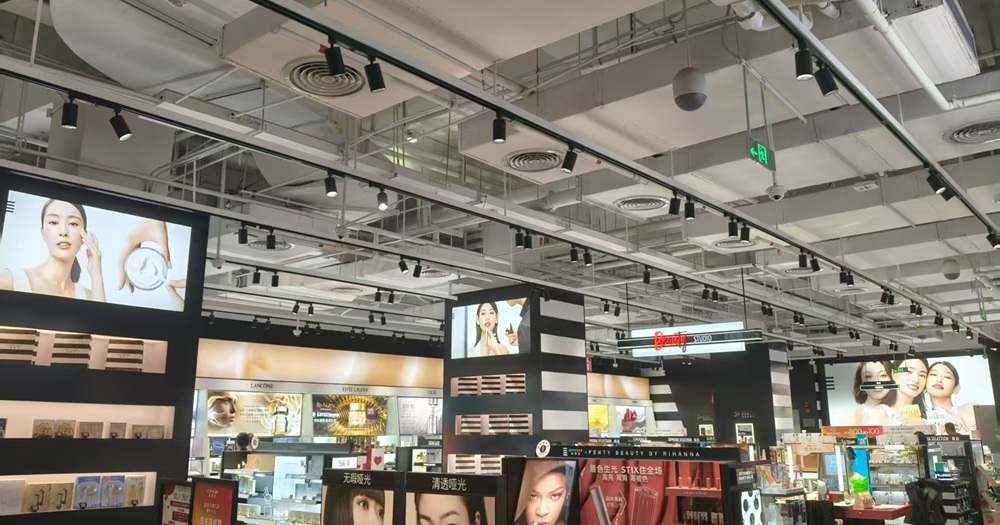
Track lighting has become a go-to lighting solution for modern interiors and commercial spaces. LED track lighting combines style, flexibility, and energy efficiency, making it an excellent choice for many lighting needs. Here’s a complete guide.
Table of Contents
What Is LED Track Lighting?
LED track lighting consists of a rail (or track) mounted to the ceiling or wall, with one or more LED fixture heads that can be attached, moved, angled, or removed along that rail. The track supplies power, and the LED heads plug into it. Features include:
- Adjustable direction: the heads can point wherever needed.
- Moveability: you can slide the lights along the track.
- Types: line-voltage tracks (directly mains powered) or low-voltage/transformer based. Different styles like monorail, cable track, magnetic track are also common.
- LED track lights use LED technology (lower power draw, longer lifespan, better efficiency) instead of older halogen or incandescent bulbs.
Why Use LED Track Lighting?
Here are the key advantages of LED track lighting — what makes it different and often better compared to fixed ceiling fixtures or pendant lights:
1. Flexibility & Adaptability
You can adjust both the position and direction of lights. Want to spotlight a piece of art today, and change it to lighting a dining table tomorrow? Track lighting makes it easy without rewiring.
2. Energy Efficiency & Sustainability
LED track lights consume much less electricity than halogen/incandescent sources, reducing electric bills and greenhouse gas emissions. LEDs also tend to last longer, lowering maintenance and replacement costs.
3. Design & Aesthetic Appeal
Track lighting has a sleek, modern look. The minimalist track + directional heads combine utility with style. The light is more controlled — less stray light, better accent and contrast.
4. Customizable & Scalable
You can add or remove fixtures; change the beam angles; choose different CCT (color temperature) or CRI (color rendering index) heads; dim or tune light settings. It works well for evolving spaces.
5. Problem Solver
It can solve a number of typical lighting problems:
- Poor spotlighting or lack of accent on walls / art / products.
- Glare from fixed ceiling lights or harsh overhead fixtures.
- Need for flexible lighting that adapts over time (moving furniture, change of decor).
- High energy cost and maintenance overhead from less efficient lighting.
When & Where to Use LED Track Lighting
LED track lighting works particularly well in certain spaces and contexts. Here are ideal installation scenarios:
Space / Situation | Why Track Lighting Works Well |
Retail stores & boutiques | Emphasize merchandise; highlight feature displays; change positions or fixtures as promotions change. |
Art galleries & museums | Precise control over what is lit; avoid damaging heat; spotlighting works; dimmable to preserve art. |
Hospitality (restaurants, bars, hotels) | Create mood & ambiance; combine functional light & accent light; adjust for different times of day or events. |
Residential kitchens / living rooms | Task lighting (over counters, islands); accent lighting (on walls); adaptable when layouts change. |
Offices & studios | Adjustable task lighting; reducing glare; combining general lighting and accent; sometimes dimmable or tunable for circadian rhythm. |
Exhibition / trade show booths | Portable, adjustable, and flexible — easy to reconfigure. |
LED track lights shine (literally) in places where you need both function and form, especially where display, accent, and adaptability matter.
Problems LED Track Lighting Helps Solve
Here are specific lighting issues that track lighting can address:
- Uneven lighting: fixed ceiling lights often leave shadowy areas; track lights can be directed to illuminate dark corners.
- Glare or harsh general lighting: narrow beam and adjustable heads help reduce eye strain.
- Static lighting design: once fixed, other lights are hard to move; track lighting lets you update light layout with décor changes.
- High energy bills: switching to LEDs reduces consumption. Dimmable versions can save even more.
- Frequent replacement / maintenance issues: high quality LED fixtures last longer, need less maintenance.
Tips for Choosing & Installing LED Track Lighting (SEO-Friendly Advice)
Choose the right wattage & lumen output: higher lumen for larger spaces or for accenting strong features; lower for ambient mood lighting.
Beam angle & optics: narrow beams for accent, wide beams for general or ambient lighting.
Color temperature (CCT): warm whites (~2700-3000K) for cozy feel; neutral (~3500-4000K) for functional spaces; cooler for display/retail.
CRI (Color Rendering Index): go with CRI 80+ or 90+ if color fidelity matters (art, retail, food).
Dimming & control: dimmable tracks or smart controllers add flexibility and energy savings.
Flexibility: pick systems that allow moving or swapping heads without rewiring. Magnetic or modular options help.
Style & finish: track and heads should match aesthetic of room (industrial, minimalist, modern, etc.).
Conclusion
LED track lighting is more than just lights on a rail. It’s a powerful tool for lighting design — combining versatility, efficiency, and style. Whether you’re designing a retail space, gallery, restaurant, or home, LED track lighting lets you highlight what matters, adapt as your needs change, and save energy and maintenance costs.
With the right fixtures, optics, and controls, you can create ambience, focus, and beauty — all from one adaptable system.
If you’re thinking of upgrading or specifying LED track lighting, consider these factors, explore sample projects, and choose quality components for best results.
At Yiholight, we specialize in high-quality LED strips, flex neon strip, LED downlight, LED track light. Our products are engineered for durability, brightness, and ease of installation—trusted by B2B customers across the globe.
Contact us today to explore the best LED lighting for your business!