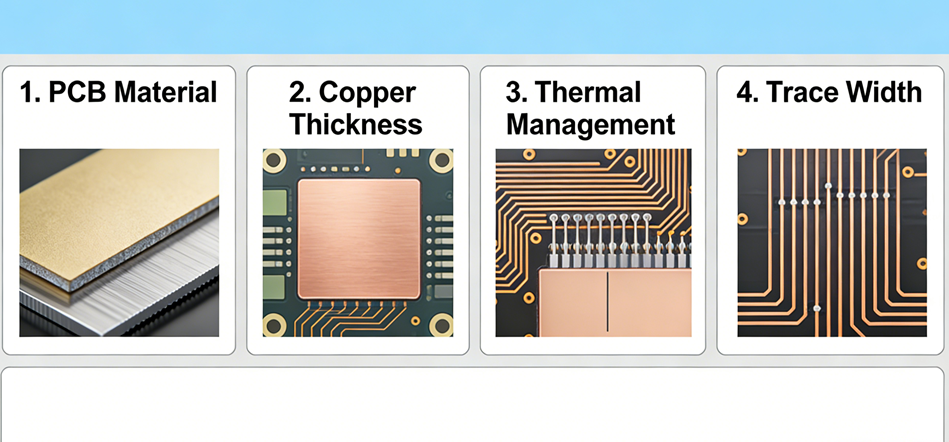
When buyers evaluate LED strip lighting, they often focus on visible specifications such as brightness, LED chip type, or color temperature. However, one of the most decisive factors influencing lifespan and reliability is completely invisible once the product is installed:
PCB design.
The printed circuit board (PCB) is the foundation of every LED strip. It determines how electricity flows, how heat is dissipated, and how stable the LEDs remain over thousands of operating hours. Two LED strips may look identical on the surface — but vastly different PCB designs can lead to dramatically different lifespans.
This article explains how PCB design affects LED strip lifespan, why it is often underestimated, and what buyers should look for when assessing quality.
Table of Contents
The PCB Is the Thermal Backbone of an LED Strip
In LED strip lighting, the PCB plays a dual role:
- Electrical conductor
- Primary heat dissipation path
Why This Matters
LED chips generate heat at the junction. That heat must:
- Transfer from the LED chip
- Move into the PCB
- Spread along the copper layer
- Exit through the mounting surface or aluminum profile
If any part of this chain is weak, heat accumulates, accelerating LED degradation.
A well-designed PCB does not merely “hold” components — it actively manages thermal energy throughout the strip.
Copper Thickness: One of the Biggest Lifespan Determinants
Copper is the most critical material in LED strip PCBs.
Thicker Copper = Better Heat Spreading
High-quality LED strips typically use:
- 2oz copper (or more)
- Wide copper traces
- Continuous thermal paths
This allows heat to spread evenly instead of concentrating around individual LEDs.
Thin Copper = Hidden Risk
Low-cost LED strips often reduce cost by using:
- 1oz or thinner copper
- Narrow traces
- Minimal thermal pads
The result:
- Localized hot spots
- Higher junction temperatures
- Faster lumen depreciation
- Shorter operational life
💡 Even a small increase in copper thickness can reduce operating temperature by several degrees — and significantly extend lifespan.
PCB Material Quality Affects Long-Term Stability
Beyond copper thickness, the base material of the PCB plays a critical role.
High-Quality PCB Materials Offer:
- Better thermal conductivity
- Stable flexibility over time
- Resistance to thermal cycling
- Strong adhesion between layers
Low-Grade Materials Can Cause:
- Delamination under heat
- Micro-cracks in copper traces
- Reduced flexibility
- Premature electrical failure
Over time, repeated heating and cooling cycles stress the PCB. Poor materials accelerate aging, even if the LED chips themselves are high quality.
Thermal Pad & Solder Pad Design Matters More Than Most Realize
The interface between the LED chip and the PCB is where heat transfer begins.
Optimized Pad Design Includes:
- Sufficient thermal pad area
- Proper copper exposure
- High-quality solder materials
- Consistent solder thickness
If this interface is poorly designed:
- Heat remains trapped at the LED junction
- The PCB cannot perform its thermal role
- LED lifespan is reduced regardless of PCB thickness
Professional manufacturers optimize pad geometry to balance:
- Electrical conductivity
- Heat transfer efficiency
- Mechanical stability
Current Distribution and Trace Layout Affect Heat Buildup
PCB design is not only about materials — it is also about electrical engineering.
Poor Trace Layout Leads To:
- Uneven current distribution
- Voltage drop along the strip
- Overdriving LEDs near the power input
- Additional heat generation
Well-Designed Layout Ensures:
- Balanced current across the entire strip
- Stable brightness from start to end
- Reduced electrical stress
- Lower overall operating temperature
This is especially important for:
- High-power LED strips
- Long run installations
- Constant voltage designs
A refined PCB layout protects LEDs from hidden electrical stress that shortens lifespan.
Flexible PCB Structure and Mechanical Stress
LED strips are flexible by design — but flexibility must be controlled.
Poor PCB Design Can Cause:
- Copper fatigue during bending
- Cracked traces
- Intermittent failures
- Long-term reliability issues
High-Quality Flexible PCBs:
- Use optimized copper patterns
- Balance flexibility and strength
- Maintain electrical integrity after repeated bending
This is especially important for:
- Curved installations
- Architectural details
- Custom-shaped lighting designs
Mechanical stress combined with heat accelerates failure if PCB structure is not properly engineered.
PCB Design and LED Aging: A Long-Term Perspective
LED lifespan is often measured as L70 or L80, not sudden failure. PCB design plays a decisive role in this aging process.
With Proper PCB Design:
- Lower junction temperature
- Slower lumen depreciation
- Stable color performance
- Predictable aging curve
With Poor PCB Design:
- Rapid brightness loss
- Early color shift
- Increased failure rate
- Inconsistent performance across batches
This is why professional LED strip suppliers invest heavily in PCB engineering and validation — even though customers never see it directly.
Why PCB Design Explains Major Price Differences
PCB quality is one of the largest cost variables in LED strip manufacturing.
High-Quality PCB Costs Include:
- Thicker copper
- Better base materials
- Advanced layout design
- Thermal simulation and testing
- Strict quality control
- Low-price LED strips often sacrifice PCB quality to:
- Reduce material cost
- Simplify manufacturing
- Increase short-term competitiveness
The result is a product that looks similar — but behaves very differently after months or years of use.
💡 PCB quality is not an expense — it is a long-term investment.
Conclusion: PCB Design Defines LED Strip Lifespan
The PCB is the silent backbone of LED strip lighting.
- It controls heat
- It stabilizes current
- It protects LEDs
- It determines lifespan
While brightness and color are immediately visible, PCB quality defines long-term performance. Buyers who understand PCB design can make smarter decisions, reduce maintenance costs, and avoid premature failures.
In LED strip lighting, what you cannot see often matters most.
Other articles:
LED lighting for office spaces: benefits, applications and design tips
From flat to fabulous: transform walls with LED lighting
This shelf lighting is magic: transform your space with LED strip lights
As a bespoke lighting solution provider, Yiholight specializes in high-quality LED strips, flex neon strip, LED downlight, LED track light. Our products are engineered for durability, brightness, and ease of installation—trusted by B2B customers across the globe.
Contact us today to explore the best LED lighting for your business!
© [Yiholight] and [www.yiholight.com]. Unauthorized use or duplication of this material is strictly prohibited without express written permission from the site’s author or owner. Excerpts and links may be used, provided full, clear credit is given to [Yiholight] and [www.yiholight.com], with appropriate, specific direction to the original content.